Wearable Health Tech: What Your Devices Can Actually Measure
In November 2017, a 64-year-old engineer in Sacramento noticed a notification on his Apple Watch he had never seen before: an irregular heart rhythm alert. He dismissed it twice. On the third alert, he booked an appointment. His cardiologist confirmed atrial fibrillation — a condition that, according to the CDC, affects roughly 2% of adults under 65 and 9% of those 65 and older. The watch did not diagnose him. It flagged a pattern worth investigating, and that distinction matters for every wearable on your wrist today.
Smartwatches, fitness trackers, continuous glucose monitors, and smart rings promise proactive health management. The promise is real. The mechanism is narrower than the marketing suggests. This article answers five questions people ask before buying — and explains where consumer devices end and clinical medicine begins.
Can a Smartwatch Detect Atrial Fibrillation?
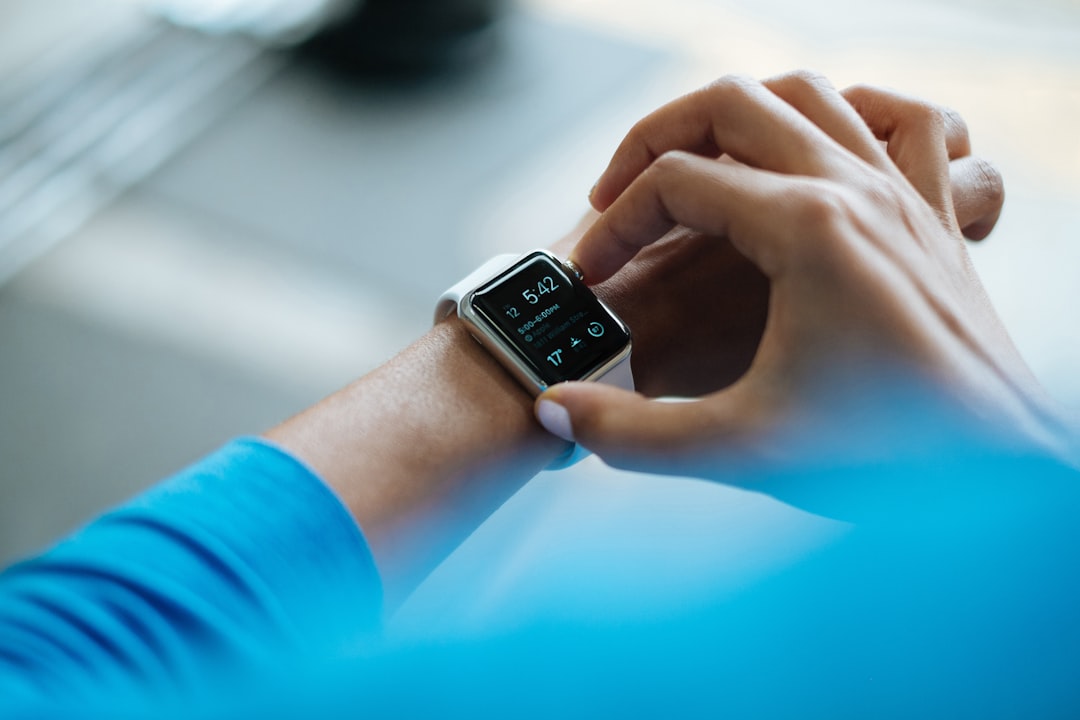
Yes — with important qualifications. Apple Watch Series 1 and later can detect irregular heart rhythms suggestive of AFib through an FDA-cleared feature called irregular rhythm notification. According to Apple Support, the watch occasionally checks your heartbeat when you are still, because motion corrupts optical readings. Stillness is the mechanism; without it, the sensor cannot reliably distinguish signal from noise.
"The irregular rhythm notification feature on your Apple Watch will occasionally look at your heartbeat to check for an irregular rhythm that may be AFib. This usually happens when you're still to ensure a more accurate reading."
The clinical evidence runs deeper than a product page. Stanford Medicine conducted the Apple Heart Study — a landmark trial registered on ClinicalTrials.gov (NCT03335800) — enrolling participants aged 22 and older with an iPhone 5s or later and Apple Watch Series 1 or later. As Stanford Medicine describes it, the study app uses Apple Watch data to identify irregular heart rhythms, including those from potentially serious conditions such as atrial fibrillation. AFib is a leading cause of stroke; early detection through wearable technology may prevent more serious outcomes, though the watch itself is a screening tool, not a replacement for an ECG in a cardiology office.
This is not to say every alert requires emergency care. False positives happen. The mechanism works because photoplethysmography detects pulse irregularity over time — not because the watch reads your heart like a hospital monitor. When an alert fires, the correct response is clinical confirmation, not panic or dismissal.
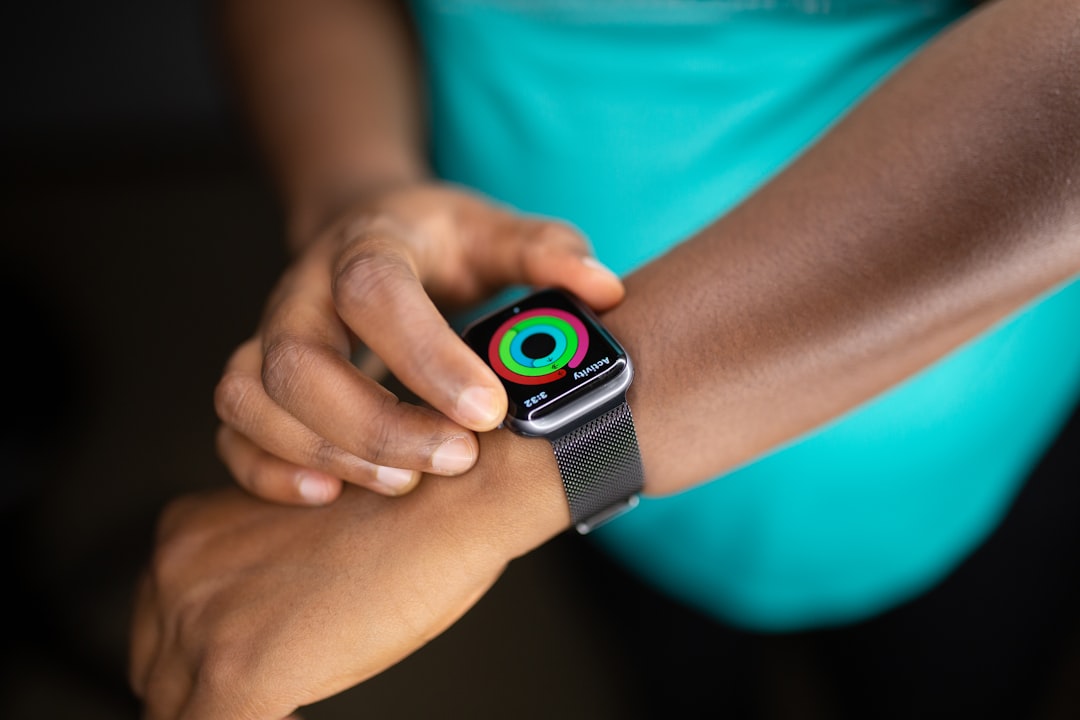
Which Wearable Has the Most Accurate Heart Rate Sensor?
Accuracy depends on context: rest, exercise, sleep, and skin tone all shift the answer. A 2022 validation study by Miller, Sargent, and Roach published in Sensors compared six wearables — including Apple Watch S6, Garmin Forerunner 245, Polar Vantage V, and Oura Ring Generation 2 — against electrocardiography during overnight sleep in 53 adults. All devices showed measurable bias versus ECG-derived heart rate. Oura overestimated heart rate by a small average margin; Apple Watch did as well. No wrist device matched a chest strap's precision during high-intensity movement.
For the three devices most people compare — Apple Watch, Oura Ring, and Fitbit — the practical difference is context, not brand loyalty. At rest, all three perform adequately for trend tracking. During interval training, optical sensors lag because blood perfusion changes faster than algorithms update. Chest straps remain the reference for athletes who need beat-by-beat accuracy. Wrist wearables remain the reference for continuous, passive monitoring you will actually wear.
Heart rate accuracy is not a single ranking. It is a tradeoff between precision under load and compliance over months. A perfect sensor you leave on your nightstand measures nothing.
How Accurate Are Smart Rings for Sleep Tracking?
Among consumer wearables, smart rings currently lead sleep-stage estimation — at least in validated studies of healthy sleepers. Robbins and colleagues, in a 2024 study of 35 adults aged 20 to 50, compared Oura Ring Gen3, Fitbit Sense 2, and Apple Watch Series 8 against polysomnography — the gold standard sleep assessment. All three devices achieved at least 95% sensitivity for detecting sleep versus wake. For sleep-stage discrimination, Oura Ring sensitivity ranged from 76.0% to 79.5% with precision of 77.0% to 79.5%. Critically, the Oura ring showed no statistically significant difference from polysomnography in estimating wake, light sleep, deep sleep, or REM sleep duration.
Fitbit overestimated light sleep by 18 minutes and underestimated deep sleep by 15 minutes. Apple Watch underestimated deep sleep by 43 minutes and overestimated light sleep by 45 minutes. For total sleep duration, all three devices matched PSG closely — within 3 to 7 minutes for REM estimation.
Of course, these results apply to healthy adults without sleep disorders. A ring on your finger measures blood volume changes and temperature at a site with less motion artifact than a wrist. That is the mechanism behind the accuracy gap. It does not mean Oura replaces a sleep medicine specialist if you suspect apnea or insomnia.
What Is the Best Wearable for Blood Pressure Monitoring?
Most smartwatches estimate wellness metrics. Few measure blood pressure with clinical validation. As of 2025, the strongest evidence supports cuff-oscillometric smartwatches — devices with an inflatable bladder inside the band — rather than optical pulse-wave estimates.
A 2025 validation study by Liu and colleagues found the Huawei Watch D2 met ANSI/AAMI/ISO 81060-2:2018 international accuracy standards in both seated and supine positions, with only 0.4% of readings exceeding a difference of ±15 mmHg. In nocturnal testing, it produced blood pressure data comparable to traditional ambulatory blood pressure monitoring while causing significantly less sleep disruption. A separate 2026 JMIR Formative Research study of the Samsung Galaxy Watch 6 in adults over 50 found good agreement with reference devices for systolic and diastolic blood pressure (ICC = 0.88 for both) under controlled resting conditions.
Apple Watch does not currently offer FDA-cleared blood pressure measurement. Fitbit tracks heart rate variability and resting metrics but not validated BP. If blood pressure is your primary concern, buy a device with published validation against ISO standards — and take repeated seated readings, because a single wrist measurement tells you almost nothing.
Do Continuous Glucose Monitors Work for Non-Diabetics?
They can — and the category now has regulatory backing for exactly that use case. Stelo by Dexcom, described at Stelo.com, is the first FDA-cleared over-the-counter continuous glucose biosensor for people 18 and older not on insulin. It provides 24/7 personalized glucose insights showing how food, exercise, sleep, and stress affect glucose levels. Each sensor lasts up to 15 days and integrates with Oura Ring for a combined view of metabolic and biometric data.
"Through 24/7 personalized glucose insights, Stelo shows you how food, exercise, sleep, and stress affect your body."
Accuracy matters because CGM reads interstitial fluid, not blood. According to Dexcom, the G7 system achieves a mean absolute relative difference (MARD) of 8.0% for adults 18 and older — lower MARD means higher accuracy. For comparison, Abbott FreeStyle Libre 3 Plus registers MARD of 8.2%. These numbers are clinically useful for diabetics managing insulin. For non-diabetics, the value is pattern recognition: seeing which meals spike glucose, which workouts stabilize it, and how poor sleep correlates with next-day variability.
This is not to say every non-diabetic needs a CGM. Normal glucose regulation in healthy adults stays within a relatively tight range. The mechanism Stelo offers is behavioral feedback — connecting subjective feeling to objective metabolic response — not disease screening.
Consumer Wearables vs Clinical Devices: Where the Line Falls
A hospital ECG diagnoses. A watch notification suggests. A polysomnography study measures brain waves. A ring estimates sleep stages from proxy signals. The gap is not dishonesty — it is design intent. According to Apple's healthcare platform, Apple Watch can detect possible underlying conditions so that you can take action sooner — and researchers worldwide use Apple Watch data through ResearchKit and CareKit to conduct medical studies at scale.
Three comparisons clarify the landscape:
- Apple Watch excels at irregular rhythm screening, broad health ecosystem integration, and FDA-cleared features for specific conditions.
- Oura Ring excels at sleep-stage accuracy and passive overnight wear with minimal battery anxiety.
- Fitbit excels at activity tracking and long-term habit metrics, with sleep staging that trails Oura in validated studies but remains adequate for duration tracking.
CGMs like Stelo extend the model from cardiovascular and sleep signals into metabolic monitoring for people without diabetes — a category that did not exist in consumer form five years ago.
Wearable health technology is not a replacement for your physician. It is an early-warning layer you wear daily because annual checkups miss what happens between appointments. Buy for the metric you will act on, verify alerts clinically, and treat published validation data — not product adjectives — as the basis for trust.