
Solar Generator Wattage: Calculate What You Need
In August 2003, a Cleveland homeowner named Margaret Chen spent fourteen hours without grid power during the Northeast blackout. She owned a 1,500-watt portable generator and a mental list of appliances she assumed she could run together. The refrigerator compressor started. The well pump tried to join. The inverter tripped within four seconds. Margaret had counted running watts. She had ignored surge watts—and surge watts, not running watts, decide whether a backup plan survives its first real test.
This guide walks through the same calculation Margaret needed: how many watts you need for a refrigerator and lights, whether a 2,000-watt unit can run a well pump, what a 3,000-watt solar generator actually covers, and how to size a system for a week off-grid. The mechanism is straightforward. You list devices, separate running watts from startup surge, multiply by hours, and add a buffer for losses. The discipline is harder than the math.
Running Watts Are Steady State; Surge Watts Are the Real Gate
How do you know whether your generator can handle an appliance? You check two numbers, not one. Running watts describe what a device draws once the motor or compressor is already turning. Surge watts describe the brief spike when that motor first kicks on—typically two to four times the running figure for refrigerators, well pumps, and window air conditioners, according to WattBunker.
The U.S. Department of Energy explains why refrigerators confuse this calculation. As the agency notes in its Energy Saver guidance:
"To estimate the number of hours that a refrigerator actually operates at its maximum wattage, divide the total time the refrigerator is plugged in by three. Refrigerators, although turned 'on' all the time, actually cycle on and off as needed to maintain interior temperatures."
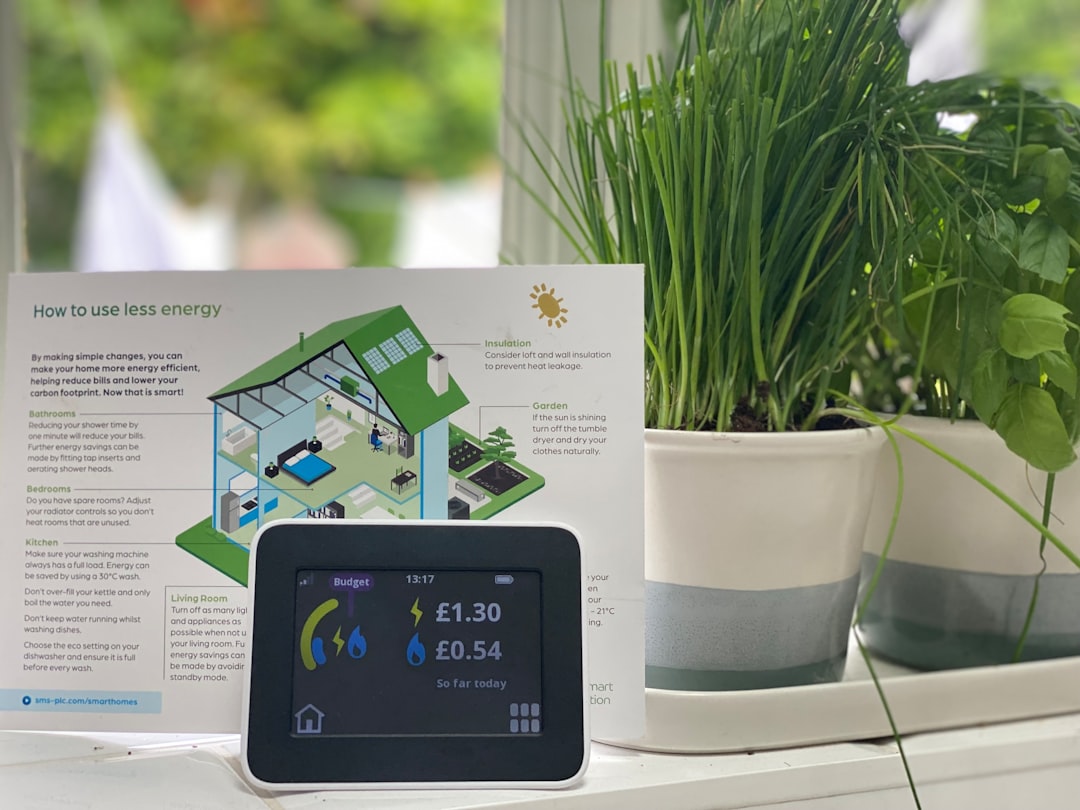
A refrigerator is not a 725-watt load running twenty-four hours straight. It is a cycling compressor. Virginia Cooperative Extension, in its Building Science publication developed with the NASULGC/DOE Building Science Community of Practice, lists a frost-free 16-cubic-foot refrigerator at approximately 725 watts maximum—but ENERGY STAR-certified models of similar size often draw 100 to 200 watts while running, at least 20% below federal standard models. The nameplate shows maximum draw. Your backup plan needs average draw and startup surge.
LED bulbs tell the opposite story. A 60-watt-equivalent LED draws 8 to 10 watts, per Virginia Cooperative Extension. Six bulbs total roughly 54 watts—negligible compared to a single motor load. This is not to say lights do not matter for daily energy totals. They do. But lights rarely kill an inverter. Motors do.
The Four-Step Wattage Calculation Worksheet
How do you calculate home backup wattage without guessing? You follow a worksheet that separates power (watts) from energy (watt-hours). Back Up Energy Guide frames the core logic: list every essential device, record its wattage, multiply by backup hours, and add 20% to 30% for inverter efficiency losses and battery aging.
Step 1: Inventory and Read the Nameplate
Walk through your home and record each device you intend to run. The U.S. Department of Energy notes that most U.S. appliances operate at 120 volts, while large appliances like dryers and cooktops use 240 volts. If the nameplate lists amps but not watts, multiply amps by voltage: a 120-volt, 6-amp refrigerator draws 720 watts. For uncertain devices, the DOE recommends plug-in electricity monitors ($25 to $50) that measure real-time wattage at any 120-volt outlet.
Step 2: Separate Running Watts from Surge Watts
Sum the running watts of everything you plan to operate simultaneously. Then add the highest single startup surge from any one motor-driven device—not the sum of all surges, just the largest one. Jackery states this plainly: you must calculate total simultaneous running watts plus the highest starting watts for any one device. A modern refrigerator might need 400 running watts but up to 1,800 surge watts at compressor startup.
Step 3: Convert to Daily Watt-Hours
Virginia Cooperative Extension provides the daily energy formula: (Wattage × Hours Used per Day ÷ 1000) = Daily Kilowatt-hour consumption. For watt-hours, skip the division: Watts × hours = watt-hours. Apply the refrigerator cycling rule from the DOE—divide plugged-in hours by three to estimate actual compressor runtime.
Step 4: Add Your Buffer
WattBunker recommends a 20% safety buffer for inverter losses and cold-weather de-rating. startOFFgrid advises sizing the inverter to at least 1.5× your largest single appliance's wattage to handle startup surge, and using a pure sine wave inverter because modified sine wave units can damage sensitive electronics and motors.
Example: refrigerator (150 running watts, 600 surge), Wi-Fi router (15W), six LED bulbs (54W), phone chargers (20W). Simultaneous running load: roughly 239 watts. Inverter must handle 239W continuous and 600W surge minimum. Daily energy: refrigerator at 150W × 8 cycling hours = 1,200 Wh, plus 150 Wh for router and lights over 10 hours = roughly 1,350 Wh/day before buffer. Add 20%: about 1,620 Wh minimum battery capacity for one day of essentials.
What 2,000W, 3,000W, and a Week Off-Grid Actually Cover
Will a 2,000-watt solar generator run a well pump? Maybe—but probably not reliably. Virginia Cooperative Extension places deep well water pumps between 250 and 1,100 running watts. WattBunker adds a 3× to 4× surge multiplier for pump startup. A pump rated at 1,000 running watts may demand 3,000 to 4,000 watts for two to five seconds at startup. A 2,000-watt inverter covers the running load. It fails the surge test unless its peak rating exceeds the pump's startup demand—and you cannot run much else simultaneously.
What appliances can a 3,000-watt solar generator power? UDPOWER confirms that a 3,000W unit can run a mix of lights, routers, TVs, laptops, kitchen appliances, and some motor loads. Concrete examples from their appliance chart: a microwave at 750 to 1,100 watts, a coffee maker at 900 to 1,200 watts, and outage essentials (router, six LED bulbs, TV, chargers, laptop) totaling under 400 watts running—comfortably within capacity. A 3,000Wh battery at 300W load delivers roughly 8.5 hours; at 600W, about 4.3 hours. Well pumps in the 1,000 to 2,000W range may work, but only if startup surge clears the inverter's peak rating.
What size solar generator do you need for a week off-grid? Capacity, not inverter watts, becomes the constraint. startOFFgrid recommends batteries sized for two to three days of autonomy, then multiplied by the number of days and divided by 0.80 depth of discharge for LiFePO4 chemistry. A cabin using 2 kWh per day for seven days needs 14 kWh gross; at 80% usable depth, that is 17,500 Wh of battery. Solar panel sizing follows: (daily Wh × 1.2 loss factor) ÷ peak sun hours. At 4.5 peak sun hours, 2,000 Wh/day requires roughly 530 watts of panels just to break even daily—not to recharge a depleted week-long reserve.
WattBunker estimates a home blackout essential load—fridge, Wi-Fi, phone, LED lights, gas furnace blower—at roughly 5,700 Wh/day with buffer. Seven days at that load demands near 40,000 Wh of storage unless solar panels recharge daily. A week off-grid is a solar panel problem as much as a battery problem.
Three Scenarios: Camping, RV, and Home Backup
How do wattage needs differ by situation? The same physics apply. The load lists do not.
Camping (Under 500 Wh/day)
Camping loads stay minimal: LED headlamp equivalents, phone charging, a small fan at 55 to 250 watts per Virginia Cooperative Extension data. A 500Wh unit covers a weekend. You size for convenience, not survival.
RV Living (1,500 to 3,000 Wh/day)
An RV adds a compressor refrigerator, water pump, and possibly a microwave (750 to 1,100 watts). Running watts for simultaneous use often land between 800 and 1,500 watts. Battery capacity matters more than peak inverter output because boondocking stretches overnight hours without solar input. A 2,000Wh system with 400 watts of solar input can sustain essentials across a 14-hour night if you schedule heavy loads for daylight recharge.
Home Backup (2,000 to 12,000 Wh/day)
Home backup is the hardest scenario because you inherit full-size appliances. Back Up Energy Guide calculates that 1,500 watts of essential loads for 8 hours requires at least 12,000 Wh before the 20% to 30% efficiency buffer. That figure—12,000 Wh for eight hours at 1,500W—reveals why "whole house" marketing misleads: most portable solar generators store 1,000 to 3,000 Wh, enough for selective circuits, not unrestricted home operation.
Common Mistakes That Collapse Backup Plans
What causes most solar generator sizing failures? Four errors recur.
Mistake 1: Counting nameplate watts as continuous load. The DOE warns that stamped wattage is maximum power, not typical consumption. An ENERGY STAR refrigerator rated at 200 running watts behaves differently from a 725-watt legacy unit. Measure or estimate cycling, do not assume 24-hour maximum draw.
Mistake 2: Ignoring surge when stacking devices. You can run a refrigerator and lights on a 2,000W inverter. You cannot necessarily add a well pump while the refrigerator compressor is starting. Schedule motor loads sequentially, not simultaneously.
Mistake 3: Sizing battery for inverter watts instead of watt-hours. A 3,000W inverter with a 600Wh battery runs a 1,500-watt space heater for roughly 24 minutes. Inverter capacity is not runtime. Watts × hours = watt-hours. Always.
Mistake 4: Skipping the buffer. Cold weather reduces lithium battery output. Inverters lose 10% to 15% converting DC to AC. Batteries lose capacity with age. The 20% buffer from WattBunker and Back Up Energy Guide is not optional padding—it is the margin between a plan that works once and a plan that works on the third night of an outage.
Closing the Calculation
Solar generator sizing is not a shopping decision. It is an inventory decision. You list what must stay on, you measure or estimate what each device draws at startup and at steady state, you multiply by hours to get watt-hours, and you add buffer for the losses you cannot eliminate. A 2,000-watt unit handles outage essentials if you respect surge limits and accept that well pumps sit at the edge of its capability. A 3,000-watt unit opens the kitchen and entertainment layer while still demanding careful load scheduling. A week off-grid requires kilowatt-hours of storage and hundreds of watts of solar recharge—not a larger label on the same box. Write the worksheet before you write the check. The math takes twenty minutes. Margaret Chen's blackout lasted fourteen hours; her miscalculation ended her backup in four seconds.