
Smart Home Technology Trends for 2026: What Actually Matters
On June 17, 2026, an electrician in Munich held a smartphone against a light bulb still in its packaging. The bulb had no power. No Bluetooth handshake ran. The full Matter commissioning exchange completed over NFC alone. That single gesture — tap, confirm, done — is not a marketing vignette. It is the mechanism Matter 1.6 introduced to solve a problem every smart home owner has lived through: devices that need configuration before they can reach their final location.
This article answers five questions you likely arrived with: what smart home technology defines 2026, what the Matter protocol actually does, whether AI assistants will run your home, how to future-proof your setup, and which upgrades earn their cost this year. The answers draw on specification releases, adoption data, and energy research — not speculation.
What Smart Home Technology Is Coming in 2026
How do you know a category has matured? You stop counting new gadgets and start counting infrastructure.
According to Parks Associates, adoption of any core smart home device reached 49% of U.S. internet households in the second half of 2025 — a four-point jump year-over-year. Video doorbells climbed seven points. Smart cameras rose six. The pattern is not novelty. It is consolidation.
Three forces define 2026 specifically. First, Matter interoperability crossed critical mass: over 4,800 certified devices as of 2025, up from roughly 600 at the October 2022 launch, per Axis Intelligence. Second, AI moved from optional feature to baseline expectation. Parks Associates notes that manufacturers now treat AI as a default layer for 2026 product portfolios, with Amazon accelerating Alexa+ and Google deploying Gemini across Home devices. Third, energy management shifted from thermostat-only optimization to whole-home orchestration — systems that coordinate HVAC, storage, EV charging, and solar generation against real-time electricity prices.
The global smart home market reached approximately $164–180 billion in 2026, with North America holding 36% of revenue share. Security remains the largest segment at $41.4 billion, with cameras growing at 15–21.7% CAGR. The average U.S. connected household now operates 22 IoT devices. Growth continues. So does attack surface — roughly 29 cyber incidents per day per household, according to NETGEAR/Bitdefender 2025 data cited by Axis Intelligence.

What Is Matter Protocol and Why Does It Matter
What if the problem was never the devices — only the contracts between them?
Matter is not a brand. Matter is an open-source, IP-based connectivity layer developed by Apple, Amazon, Google, and Samsung, operating over Wi-Fi, Ethernet, and Thread. The Verge describes it accurately: a shared language that lets a lock, thermostat, or camera speak to any authorized ecosystem without proprietary translation layers.
Fragmentation is the old tax. Interoperability is the new deposit. You pay setup time once; you withdraw control from every platform you choose.
As of mid-2026, Matter has certified over 1,200 unique products, with 940 member companies and 300 actively developing against the standard, according to The Verge's coverage of the CSA Unify conference. Thread membership grew 27% over two years, with over 1,000 certified Thread devices — 151 arriving in 2026 alone.
Matter 1.6, released June 17, 2026, by the Connectivity Standards Alliance, addresses three persistent friction points. NFC-Based Commissioning allows the full setup exchange over NFC without Bluetooth LE — critical for ceiling fixtures and in-wall switches configured before mains power connects. Joint Fabric lets multiple user-authorized controllers co-administer a single shared Matter network. You add a device once; it appears across Apple Home, Google Home, Alexa, and SmartThings with revocable authority. Thermostat Suggestions replace blunt commands with time-bound recommendations evaluated against user preferences and current conditions.
"Joint Fabric creates a single Matter network that Apple Home, Amazon Alexa, Google Home, Samsung SmartThings, and so on can all become co-signers on. You add a device once, and it appears across all authorized ecosystems."
Tobin Richardson, CEO of the Connectivity Standards Alliance, stated the remaining challenge plainly at Unify: Matter will not succeed until every platform operates at parity. Apple, Google, and Amazon remained on Matter 1.3 as of mid-2026 despite the 1.6 release — a version gap that delays consumer access to Joint Fabric and NFC commissioning. This is not to say Matter has failed. It means your buying decision should weight certified hardware over ecosystem promises.
Will AI Assistants Run Future Smart Homes
Will your home obey commands — or will it interpret intent?
AI assistants in 2026 occupy two distinct roles. Voice platforms — Alexa+ and Google Gemini for Home — handle conversational control: describing automations in natural language rather than navigating rigid app workflows. Home energy agents handle optimization: processing weather forecasts, electricity prices, household demand, and stated goals to determine when devices should run.
Amazon and Google accelerated AI-enhanced ecosystems throughout 2025, positioning them as the value layer above device hardware, per Parks Associates. Google's $99.99 Google Home Speaker, shipping June 25, 2026, ships with Gemini for Home — supporting multi-step conversations, continued dialogue without repeated wake words, and camera activity summaries through optional Home Premium subscriptions.
Energy AI operates differently. Researchers writing in Frontiers in Control Engineering (2026) document that machine learning, deep learning, and reinforcement learning markedly enhance energy efficiency and real-time decision-making in smart homes. Babu et al. (2025) reported savings up to 70% in dynamic load scenarios using adaptive algorithms. Edge AI enables sub-200 millisecond response times by processing locally rather than routing through cloud servers.
EcoFlow's OASIS 3.0 platform, unveiled at Intersolar Munich in June 2026, illustrates the shift toward intent-driven intelligence. With over 3.4 million users worldwide, OASIS deploys EcoBot — an AI energy agent that accepts goals like "I need my car ready by 8 a.m. tomorrow at the lowest possible cost" and optimizes generation, storage, and consumption accordingly.
"Users simply define their goals – such as reducing energy costs, increasing self-sufficiency, or maintaining backup power. OASIS works out how to get there, handling the complexity while keeping them in control."
Of course, most research still concentrates on single-resource systems and lacks comprehensive energy-water optimization frameworks, as the Frontiers authors acknowledge. AI will run significant portions of future smart homes. It will not replace your judgment about tradeoffs — only automate the arithmetic beneath them.
How to Make Your Home Future-Proof With Technology
How do you build a home that absorbs new standards without repeated replacement?
Future-proofing is not buying the most devices. Future-proofing is choosing devices that reduce switching costs when standards evolve.
Prioritize Matter-certified hardware with Thread support for battery-powered sensors and Wi-Fi or Ethernet for mains-powered devices. Thread's 71 certified components as of 2026 give manufacturers a stable foundation — your sensor purchased today retains interoperability as hubs update. Select ecosystems that commit to Matter parity; monitor whether your platform adopts specifications beyond 1.3, because Joint Fabric and NFC commissioning require platform support, not just device certification.
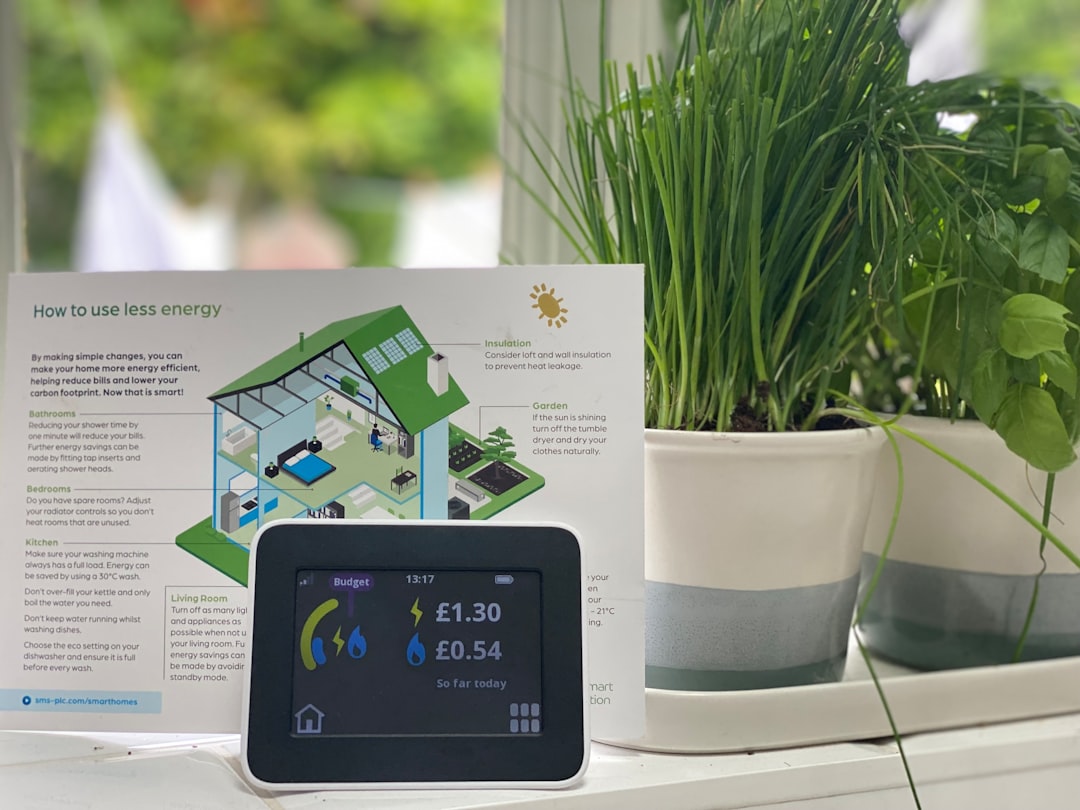
Invest in energy intelligence before aesthetic gadgets. EPA ENERGY STAR-certified smart thermostats save an average of 8% on heating and cooling bills — roughly $50 per year — with premium models like ecobee Premium reaching up to 23% HVAC savings, per Axis Intelligence. Layer per-device monitoring through smart plugs, then graduate to whole-home energy management if you operate solar, storage, or an EV charger.
Address security as infrastructure. With 29 daily attack attempts against average connected households, segment IoT devices on a separate network, enable automatic firmware updates, and favor platforms with local processing for camera feeds when privacy matters.
What Are the Best Smart Home Upgrades for 2026
Which upgrades return measurable value within twelve months?
Rank purchases by mechanism, not category hype.
- Matter-certified security cameras and video doorbells — Parks Associates recorded seven-point and six-point adoption gains respectively. Security remains the $41.4 billion anchor segment with the fastest camera subcategory growth.
- Smart thermostats with demand-response integration — Connect to utility programs that adjust temperature two to three degrees during grid stress events, earning $5–10 per event in credits atop baseline 8–23% HVAC savings.
- Thread-based sensors and locks — Low-power, mesh-networked devices that remain compatible as Matter matures; 151 new Thread devices certified in 2026 alone.
- Smart appliances with energy reporting — Washer ownership rose from 7% to 9% and dryers from 6% to 8% between Q4 2024 and Q4 2025, signaling that white goods now participate in home energy data.
- AI-capable hub or speaker — Only if you will use conversational automation creation; otherwise a Matter-compatible border router hub delivers more durable value.
Defer purchases that lock you into proprietary ecosystems without Matter certification. A device that works exclusively through one app today becomes e-waste when that app deprecates a feature — regardless of hardware quality.
Conclusion
Smart home technology in 2026 is not defined by novelty. It is defined by standards that reduce setup friction, AI that translates intent into coordinated action, and energy systems that optimize cost without demanding constant manual adjustment.
Matter 1.6 fixes fragmentation at the protocol layer. AI assistants fix it at the interaction layer. Energy management fixes it at the utility bill. Choose Matter-certified hardware, demand platform parity from your ecosystem, and invest in energy intelligence before decorative connectivity. A future-proof home is not one that predicts every trend — it is one that keeps switching costs low when the next specification arrives.