Portable Solar Generators: RV, Camping & Backup Guide
In August 2023, a weekend camper named Elena parked her travel trailer at a dispersed site outside Flagstaff with a 300Wh power station and no solar panels. By noon on day two, her compressor fridge had pulled the battery flat. She had capacity without a recharge path — the classic sizing failure that looks like a product defect but is actually a math error.
This guide answers the five questions that actually determine whether a portable solar generator works for you: sizing for an RV, the best camping units, whether 3000W handles a refrigerator, how long these systems last, and the difference between a solar generator and a power station. Each answer includes the mechanism behind it, not just a shopping list.
What Is the Difference Between a Solar Generator and a Power Station?
A power station is a battery with an inverter, outlets, and a charge controller. A solar generator is that same unit bundled with compatible solar panels. The battery does the storing; the panels do the refilling. Without panels, you own a finite reservoir. With them, you own a loop.
This is not to say the terms are interchangeable in marketing copy — many retailers use "solar generator" for the battery alone. The practical distinction matters because runtime depends on watt-hours stored, while daily sustainability depends on solar input watts matched to your location's usable sun hours.
According to Popular Science, these packs "offer huge battery capacity that can fuel large devices and even appliances in a pinch" — but only when you size both halves of the system correctly. Goal Zero's Director of Product Development recommends the "rule of five": a 4,000Wh power station needs roughly 800W of solar input to recharge fully in a single good day, as cited by Outdoor Life.
LiFePO4 vs Lithium-Ion: The Chemistry That Changed Portable Power
Before 2022, most portable power stations used NMC lithium-ion cells because energy density was king. After 2022, the industry shifted almost entirely to LiFePO4 — not because density improved, but because cycle economics finally tipped.
How long does a portable solar generator last? With LiFePO4, expect 3,000 to 5,000 charge cycles to 80% capacity. Older NMC packs typically delivered 500 to 1,000 cycles — roughly one-quarter the lifespan. As Solar Power Guides notes, CATL and BYD drove LiFePO4 manufacturing costs down by roughly 40% between 2020 and 2024, making the chemistry cost-competitive despite a 25% to 35% weight penalty.
LiFePO4 carries a thermal runaway onset near 270°C versus 150°C to 210°C for NMC. The iron phosphate cathode does not release oxygen during decomposition, which dramatically reduces fire risk during the deep discharge cycles that camping and RV life demand daily.
"The choice between these two chemistries boils down to exactly three things: how often you use it, how long you plan to keep it, and whether the weight penalty matters for your situation."
Cost per cycle tells the rest of the story. LiFePO4 costs roughly 70% less per full cycle than NMC. Break-even arrives around 300 cycles. Above that threshold, LiFePO4 wins on total cost of ownership — which is why EcoFlow, BLUETTI, Anker, and Jackery have transitioned their flagship lines to iron phosphate as of 2026.
How to Size a Solar Generator for Your RV
What size solar generator do you need for your RV? The answer is not a single watt number. It is a chain.
OffGridRVHub frames it precisely: "Solar sizing is a chain: daily loads, realistic sun, losses, roof fit, controller limits, and battery reserve all have to agree." Most RVs need 200W to 400W of solar for light weekend use, 400W to 800W for balanced boondocking, and 800W to 1,400W or more for remote work with Starlink-class internet or heavier inverter loads.
Follow this four-step mechanism:
- Calculate daily watt-hours. A balanced boondocking setup — 12V compressor fridge (~700Wh/day), fans, lights, laptop (~400Wh), and router — consumes roughly 2,200Wh per day.
- Divide by usable sun hours. Realistic values range from 1.9 hours in a Pacific Northwest winter to 7.4 hours in a summer desert. Use NREL PVWatts for your coordinates rather than assuming five hours everywhere.
- Apply efficiency losses. Divide by 0.70 to 0.80 to account for panel angle, wiring, and controller conversion.
- Match battery to one or two days of autonomy. That 2,200Wh daily load needs at least 2,200Wh of stored capacity for one cloudy day, or 4,400Wh for two.
The formula: daily watt-hours ÷ usable sun hours ÷ 0.70–0.80 = required solar panel watts. For the 2,200Wh example above with four usable sun hours, you need 700W to 800W of solar — which aligns with OffGridRVHub's balanced-boondocking target for many travel trailers and motorhomes.
Watts are the pipe. Watt-hours are the tank. An RV with a 2,400W inverter but only 400Wh of storage can start a microwave once and then go dark. Size the tank first, then the pipe, then the refill rate.
Can a 3000W Solar Generator Power a Refrigerator?
Yes — with one critical distinction. Three thousand watts measures inverter output (the pipe). Three thousand watt-hours measures battery capacity (the tank). A buyer who conflates the two buys the wrong unit every time.
According to EcoFlow, a 3000W solar generator can run most household refrigerators, which draw 300W to 800W running with a startup surge roughly twice the running wattage. The inverter handles the surge. The battery determines how long the fridge stays cold.
Runtime follows a simple formula: (battery capacity × safe discharge percentage) ÷ device rated power = estimated hours. A 3,072Wh LiFePO4 unit at 80% safe discharge running a 500W refrigerator yields roughly 4.9 hours of continuous draw. At a more typical 150W to 250W cycling compressor load, runtime stretches to 10 to 28 hours depending on fridge size — which matches Jackery's published figures for the HomePower 3000: 13 to 22 hours on a double-door fridge, 22 to 33 hours on a mini fridge.
EcoFlow's efficiency testing, reported by Outdoor Life, found the Delta 2 delivered 88% of stated watt-hours at a 380W draw. Anker's SOLIX C1000 hit 90%. Real-world runtime will always sit slightly below the label — plan for 85% to 90% of rated capacity, not 100%.
Which Portable Solar Generator Is Best for Camping?
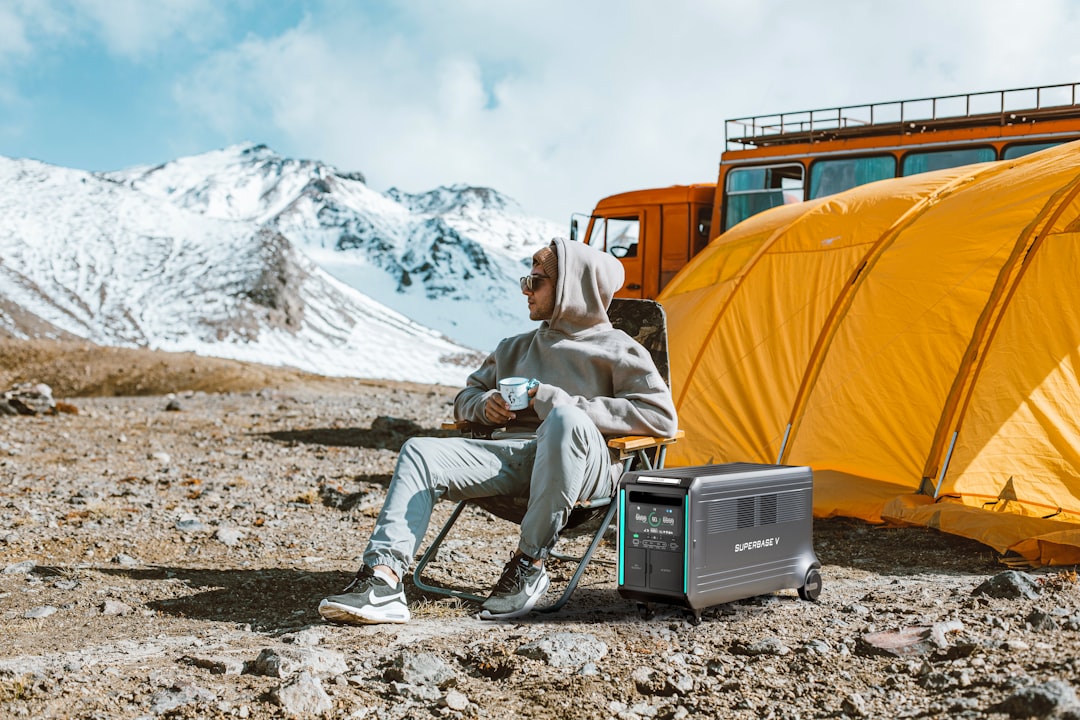
Camping rewards portability and weather resistance over raw output. Which portable solar generator is best for camping depends on whether you are car-camping with a cooler or running a compressor fridge off-grid for three days.
For ultralight weekend trips, Outdoor Life recommends the Bluetti AC60 — 403Wh capacity with IP65 weather resistance, enough for phones, lights, and a small appliance without adding 30 pounds to your loadout. For campers who need more headroom without sacrificing portability, Popular Science names the Anker Solix C800 Plus as its 2026 camping pick, while Outdoor Life highlights the Anker SOLIX C1000 — 1,056Wh, 1,800W output, and 600W solar input — as the best portable all-rounder.
Panel pairing matters as much as the battery. Outdoor Life's solar panel tests found the Jackery SolarSaga 200W produced 184W in direct sun (92% of its rating) and dropped to 49W under cloud cover. The EcoFlow 220W bifacial panel hit 197W in full sun. Budget for cloudy-day performance, not peak-sun marketing numbers.
Five Portable Solar Generators Compared
These five units cover the realistic use cases — RV living, camping, and home backup — with verified specs from the sources above.
- Bluetti Elite 200v2 — Popular Science's 2026 best overall pick. Delivers 2,074Wh and 2,600W continuous output, with X-Boost temporarily raising output to 4,600W. Suitable for van conversions and RV blackout backup.
- Anker SOLIX F2000 — Outdoor Life's best-for-RV choice. Offers 2,048Wh, 2,400W output, built-in wheels, and an RV plug — the form factor matters when you move the unit between shore power and boondocking sites.
- Bluetti AC60 — 403Wh, IP65-rated, purpose-built for camping where weight and weather exposure decide what comes off the truck.
- Anker SOLIX C1000 — 1,056Wh, 1,800W output, 600W solar input. Outdoor Life measured 90% efficiency at load — the highest in their test group.
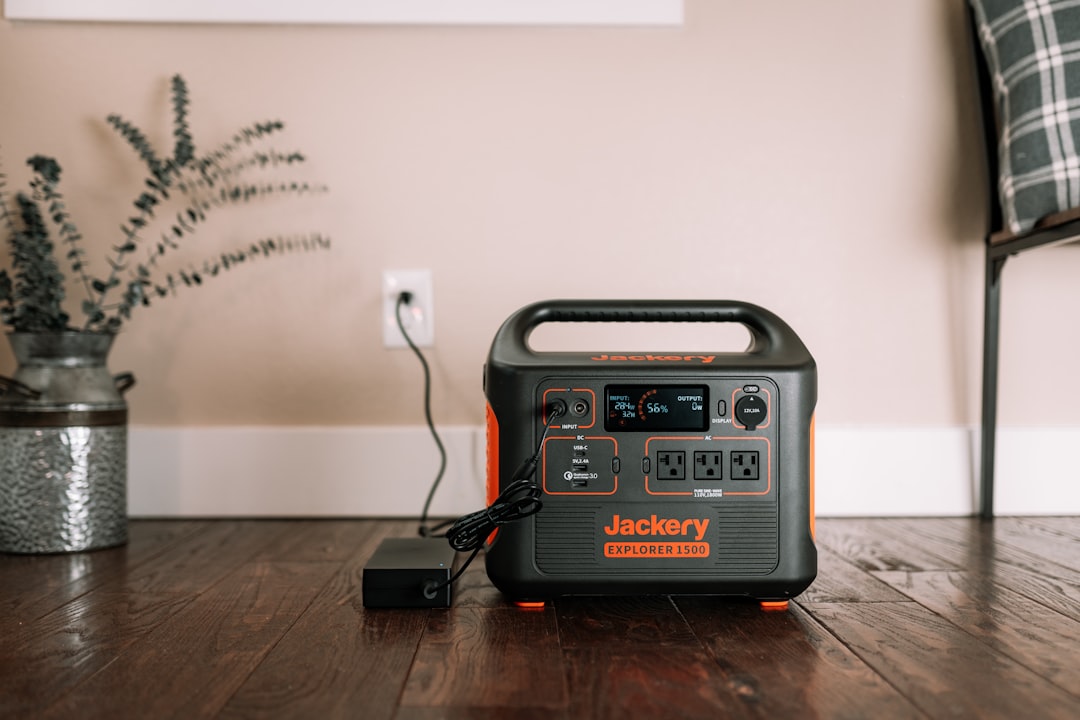
- Jackery HomePower 3000 — Popular Science's best home backup pick. Packs 3,072Wh LiFePO4, 3,600W continuous output with 7,200W surge, a TT-30 RV port, and 4,000+ charge cycles to 70% retention. Recharges from AC in 2.2 hours or from two 340W panels in six hours.
For maximum capacity with fast recharge, Popular Science also flags the EcoFlow Delta 3 Ultra Plus — 89-minute AC charge times and Storm Guard Mode that monitors weather and pre-charges before severe storms. That feature addresses a mechanism most buyers ignore: the best backup unit is the one that is full before the outage starts.
Conclusion
A portable solar generator is not a generator in the combustion sense. It is a battery with a refill schedule — and the refill schedule is the purchase decision most people skip.
Size your daily watt-hours first. Match battery capacity to one or two days of that load. Size solar panels using your location's actual sun hours and a 0.70 to 0.80 efficiency factor. Choose LiFePO4 because cycle math, not marketing, determines whether the unit still holds charge in year eight. Match inverter watts to your largest single surge load — typically a refrigerator compressor — and size 20% above that peak.
Buy the tank, the pipe, and the refill path as one system. Anything less is a battery that runs out on day two — exactly when you needed it most.