
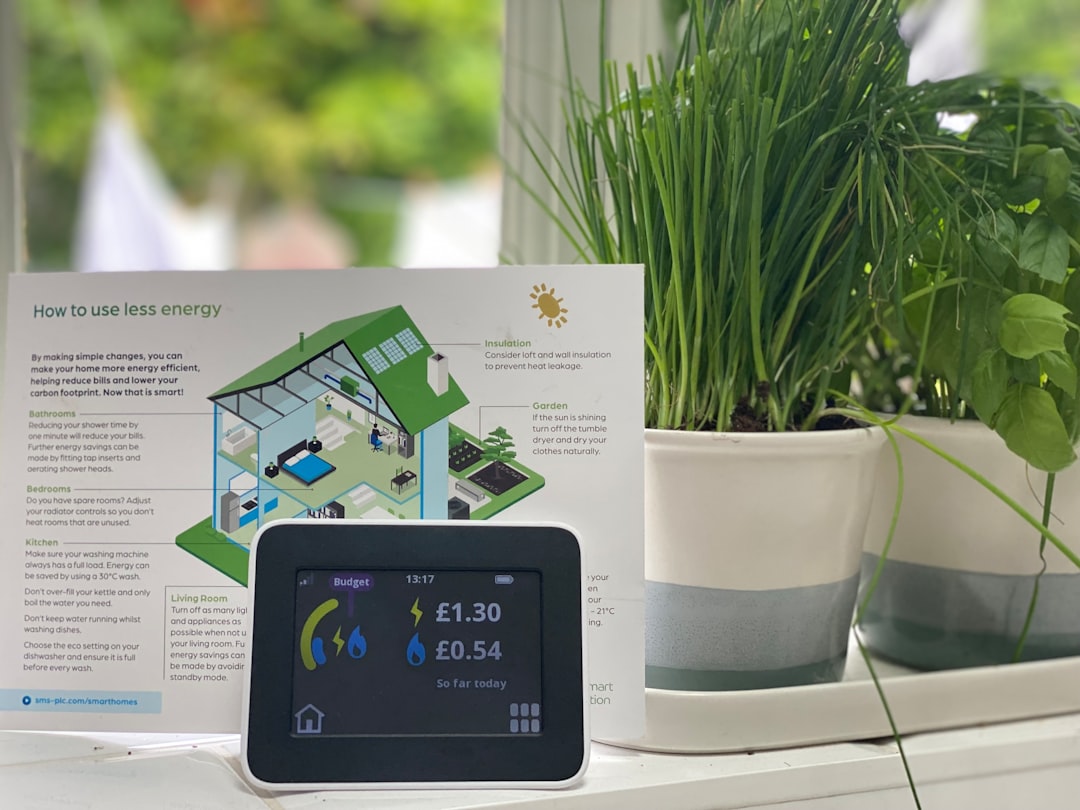
Integrate solar panels, a home battery, and smart controls by measuring circuit-level use, scheduling flexible loads for solar hours, storing remaining solar power, and using the battery when grid electricity is most valuable. This works best on time-of-use, demand-charge, or low-export-rate tariffs, where control matters as much as generation.
A solar array makes electricity. A battery moves it through time. A home energy management system decides when that movement is worth making. The useful design is not a pile of devices; it is a sequence of decisions repeated through each day.
How do smart home energy management systems work?
A smart home energy management system works by observing household demand and then coordinating connected loads, solar generation, and battery power around cost, comfort, and resilience goals. According to the U.S. Department of Energy and National Renewable Energy Laboratory smart-panel project, this can combine sensors and actuators with a smart electrical panel to adjust HVAC and water-heater setpoints and battery power.
The central principle is simple: use electricity when it is plentiful, save it when it is useful. A controllable water heater can heat water while solar output is available; a controllable air conditioner can shift some cooling into those same hours. What remains after flexible loads have used solar can move into the battery for later use.
Measurement comes before automation. A smart panel can provide high-frequency, circuit-level power measurements, allowing a system to distinguish the house's separate energy demands rather than treating the home as one opaque total. DOE describes the intended benefits as bill reduction, circuit-level monitoring, anomaly detection, automated learning, and control of behind-the-meter resources.
| System layer | Its job | Design question |
|---|---|---|
| Solar PV | Produces electricity during solar hours | How much output can the home use directly? |
| Flexible loads | Use solar at suitable times | Which water-heating and cooling settings can shift without sacrificing comfort? |
| Battery | Stores remaining output for later use | Is energy capacity, power output, or both the limiting need? |
| Smart panel or controller | Measures circuits and coordinates decisions | Which devices, tariff signals, and battery controls can it manage? |
The available evidence also sets a useful boundary. In hardware-in-the-loop testing of a 1,690-square-foot Dallas home on a typical summer day, the NLR system recorded 10.4% energy savings and 44.4% energy-cost savings. Those figures show what coordinated control achieved in that modeled test, not what every home should expect. A percentage is an outcome; the tariff and the load pattern are the mechanism.
Can I connect my solar panels to my smart home system?
Yes, solar panels can connect to a smart home system when the controller, battery equipment, and connected loads are designed to exchange the needed measurements and commands. NLR defines residential “solar-plus” as solar PV paired with battery storage and controllable devices such as smart water heaters, smart air conditioners, and electric vehicles.
Begin with the rate plan, not the product catalog. The value of automation rises when exported solar receives less than the retail electricity rate, when prices vary by time of day, or when demand charges apply. In its residential storage case study, NLR found that solar-plus improved homeowner economics under tariffs with time-of-use or demand components, or with below-retail net-metering compensation.

- Map the home. Identify solar production, major circuits, battery location, and flexible loads. The aim is to reveal where a shift is possible, not to automate every circuit.
- Set the order of use. Use current solar output for household loads that can run then; send remaining output to storage; reserve stored energy for the periods that matter under the tariff.
- Protect comfort. HVAC and water-heater controls should use setpoints and schedules that preserve the household's intended conditions. Automation that saves power but undermines comfort has missed the point.
- Review the result. Compare monitored consumption, solar production, battery behavior, and bill periods after the system is operating. A controller needs an objective it can follow; the rate plan supplies it.
NLR's Hawaii case makes the sequence visible. Where energy export was not allowed, smart air conditioning and a smart domestic water heater were dispatched to use solar output through pre-cooling and pre-heating. Remaining output went to a battery, which was then used to reduce time-of-use charges. NLR reported that solar-plus increased net present value by a factor of three relative to stand-alone solar in that specific tariff case. The lesson is not that every home will triple value. The lesson is that unused solar has less value than solar assigned a useful hour.
What is the best home battery for solar energy storage?
The best home battery is the one whose usable energy, power output, integration method, controls, and warranty fit the home's solar output, flexible loads, and tariff rather than the one with the largest single headline number. NLR's 2024 benchmark illustrates why: its representative residential system is rated at 5 kW and 12.5 kWh, or 2.5 hours at rated power, and treats power capacity and energy capacity as separate cost considerations.
Energy capacity answers how long a battery can deliver stored energy; power output answers how much it can deliver at one moment. Round-trip efficiency matters because some energy is lost while charging and discharging. NLR uses 85% as a representative residential battery-storage round-trip efficiency in its benchmark, which covers lithium-ion systems using nickel manganese cobalt and lithium iron phosphate chemistries. It also notes that lithium iron phosphate became the primary chemistry for stationary storage beginning in 2021.
| Battery | Published capacity and output | Integration and operating details |
|---|---|---|
| Tesla Powerwall 3 | 13.5 kWh nominal energy; up to 11.5 kW nominal AC output, depending on configuration | Up to 20 kW solar input; six maximum-power-point trackers; 89% solar-to-battery-to-home/grid round-trip efficiency; 10-year warranty |
| Enphase IQ Battery 5P | 5.0 kWh total and usable capacity; 3.84 kVA continuous output; 7.68 kVA peak output for three seconds | AC-coupled, modular sizing; lithium iron phosphate chemistry; 90% AC round-trip efficiency; supports backup, self-consumption, and time-of-use modes; 15-year limited warranty |
Tesla's Powerwall 3 specifications describe direct solar integration, connectivity through Wi-Fi, Ethernet, and cellular service, plus revenue-grade metering. The Enphase IQ Battery 5P data sheet describes an AC-coupled design with 5.0 kWh usable capacity per unit and modular expansion. Neither specification alone decides the better choice. A home that needs a longer stored-energy window is asking a different question from a home that needs more power for simultaneous loads.
Choose the battery after defining the system's job: self-consumption, time-of-use shifting, backup, or a combination. Then confirm compatibility among the solar equipment, battery, panel or controller, and the devices expected to shift. Generation without timing leaves value on the table. Storage without a plan merely moves it around.
Frequently Asked Questions
How can smart home tech reduce my electricity bill?
Smart home energy technology can reduce bills by moving flexible electricity use into lower-cost periods or into hours when rooftop solar is producing. NLR's smart-panel-based testing adjusted HVAC and water-heater settings and battery power; in one simulated 1,690-square-foot Dallas home on a typical summer day, it achieved 10.4% energy savings and 44.4% energy-cost savings. That is a test result, not a guaranteed household outcome, because the tariff, equipment, weather, and daily routines all matter.
Do energy management systems pay for themselves?
An energy management system can improve the value of solar and storage, but the supplied public data does not establish one universal payback period. NLR found that solar-plus increased net present value by a factor of three versus stand-alone solar in a Hawaii time-of-use case with no energy export allowed. The strongest case is generally where time-based rates, demand charges, or below-retail export compensation give the system a clear decision to make.
Sources
- National Laboratory of the Rockies REopt: Residential Solar-Plus Storage Case Study
- U.S. Department of Energy and National Renewable Energy Laboratory: Smart Electrical Panel-Based HEMS
- U.S. Department of Energy: Smart Electrical Panel-Based Home Energy Management System
- National Laboratory of the Rockies Annual Technology Baseline: Residential Battery Storage
- Tesla Energy Library: Powerwall 3 Specifications
- Enphase Energy: IQ Battery 5P Data Sheet