How to Become a UI/UX Designer in 2026
In March 2024, a former pharmacy technician named Elena opened Figma for the first time and redesigned her clinic's appointment booking flow on a Saturday afternoon. She had no design degree, no agency internship, and no portfolio. She had a broken user experience she could see clearly and twelve weeks of structured practice ahead of her. That sequence — identify a real problem, document your reasoning, ship a prototype — is the mechanism that converts zero experience into a hireable UX designer. Not talent. Not credentials. Process you can show.
This guide answers the five questions every beginner asks: how to start without experience, which skills matter, what designers earn in 2026, whether you need a degree, and which tools professionals actually use. Each section pairs a principle with a concrete next step.
Do You Need a Degree to Become a UX Designer?
Can a hiring manager reject you for lacking a bachelor's degree? Yes. Does the federal government's occupational data require one? No.
According to the U.S. Bureau of Labor Statistics Occupational Outlook Handbook, educational requirements for web developers and digital interface designers range from a high school diploma to a bachelor's degree, with no specific degree mandated. The Coursera UX Designer Salary Guide, drawing on Glassdoor data from September 2025, notes that the Google UX Design Certificate offers a recognized non-degree entry path. A degree accelerates certain foundations — psychology for research, graphic design for visual craft — but it is not the gate.
This is not to say credentials are worthless. They signal commitment. What they cannot substitute for is a portfolio that proves you solve problems systematically. The degree opens some doors. The case study walks you through them.
What Skills Do You Need for a UX Design Career?
What separates a designer who gets hired from one who gets passed over in 2026? Breadth of judgment, not depth of pixel polish.
The Nielsen Norman Group's State of UX 2026 report observes that UI is becoming less of a differentiator as interfaces standardize and AI mediates more interactions. The practitioners who thrive, NN/G writes, will be adaptable generalists who treat UX as strategic problem solving rather than focusing on producing deliverables. You need user research, information architecture, wireframing, prototyping, and usability testing. You also need the harder skill: explaining why a design decision serves a business outcome.
Of course, visual craft still matters. The Figma State of the Designer 2026 survey of 906 digital designers, conducted with NewtonX, found that 91% say AI tools improve their designs and 89% report working faster with AI. Yet Figma's own conclusion holds: AI tools make things much faster, but the precise designer's vision is what makes the difference. Designers who connect craft to human emotion tend to be happier and more successful — 87% say creative decision-making power boosts their performance.
UX design is not decoration applied after the fact. UX design is structured inquiry that produces interfaces people can actually use.
Which Tools Do Professional UX Designers Use?
What tool should you learn first? Figma. The question is settled by market share, not opinion.
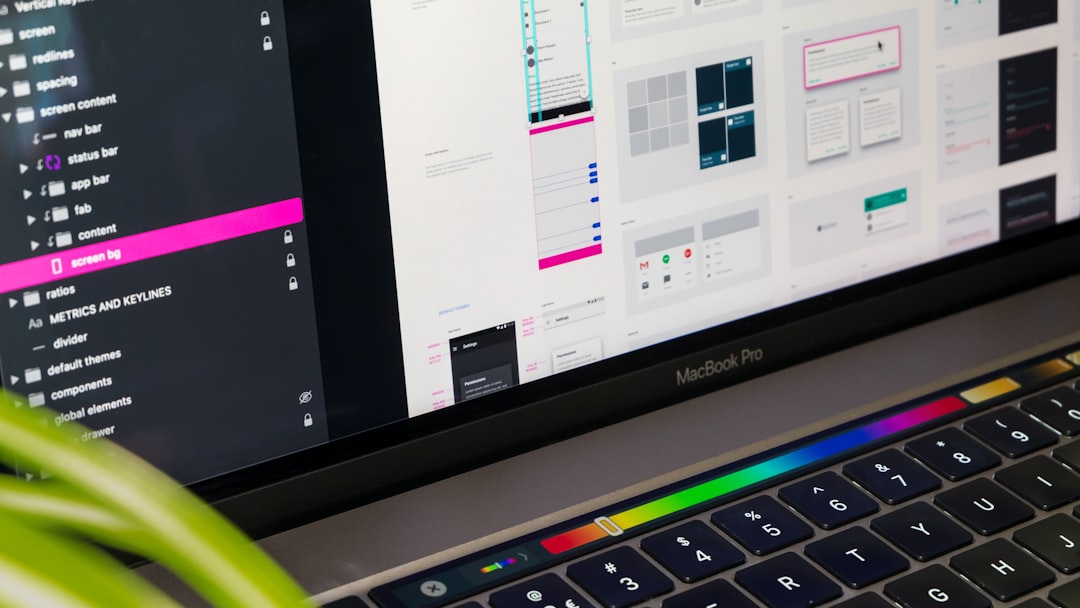
The UX Tools Design Tools Survey 2026 records Figma holding 82.3% of the UI design market — a 46:1 ratio over its nearest competitor — with 93.1% adoption among corporate individual contributors. Nine out of ten designers use Figma as their primary UI tool. Wireframing tools like Balsamiq score higher on satisfaction in niche roles, but Figma sets the benchmark for collaborative UI design. Learn Figma first because that is where hiring managers expect to see your work.
Free vs Paid Learning Paths: What Actually Works
How do you know whether a $15,000 bootcamp outperforms a free Coursera audit? Track output, not price tag.
The free path works when you impose structure on yourself. Audit the Google UX Design Certificate on Coursera at no cost, follow each module's project brief, and treat every assignment as portfolio raw material. Paid bootcamps compress the same arc into four to eight months with mentorship and career coaching — useful if you need external accountability, not because the curriculum is proprietary.
Either path must produce the same artifact: three end-to-end case studies completed within roughly 16 weeks of focused practice. One can be an unsolicited redesign of an app you use daily. Two should address original problems with documented research — interview notes, usability test results, iteration logs. Without those artifacts, neither free nor paid training converts to employment.
What Hiring Managers Actually Look for in a Portfolio
How do you become a UI/UX designer with no professional experience? Build projects that simulate professional work, then document them the way a senior designer would.
The UCLA Career Center states plainly: your portfolio is not just a gallery of your work. It is a curated subset designed to sell you for the job. Recruiters spend only a few minutes reviewing it. Each case study must include the problem, the solution with a prototype, and the outcome with metrics where possible. Hiring managers want to see how your work produced value, why you made each design decision, and what research informed the final design.
Penn State's College of Information Sciences and Technology adds a sharper timeline: managers decide within two seconds whether to look further and within 30 seconds whether to consider you. One to three well-executed case studies outperform a dozen weak ones. They do not want bullet-pointed design methods or wireframes without context. They want the reasoning behind your choices and evidence of how you think as a designer.
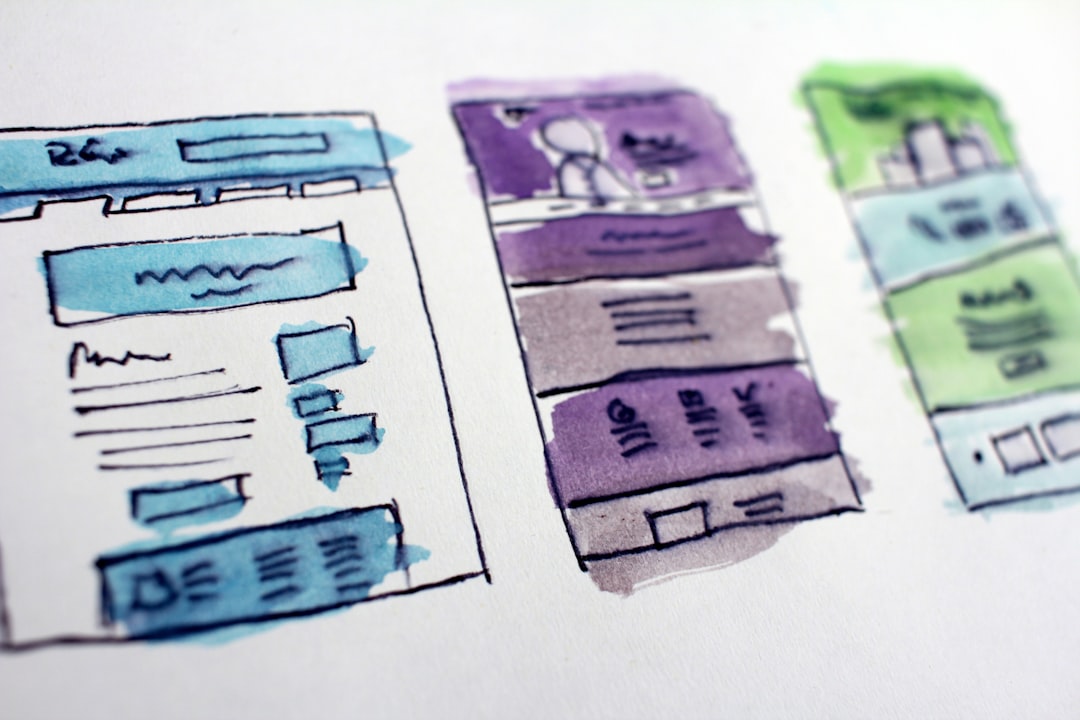
Each case study should balance showing and telling: design domain overview, research, ideation, prototyping and testing, insights, and a brief post-mortem on what you would change. Personal projects and unsolicited redesigns are valid entry points — Elena started exactly there.
How Much Do UI/UX Designers Make in 2026?
What can you realistically earn? Enough to justify the learning investment, with wide variance by experience and geography.
The BLS reports a median annual wage of $98,090 for web and digital interface designers in May 2024, with the highest 10% earning more than $192,180. Employment in this category is projected to grow 7% from 2024 to 2034 — much faster than the average for all occupations — with about 14,500 openings projected each year. Coursera's salary guide, citing Glassdoor data from September 2025, places the median total US salary for UX designers at $109,000, more than double the national median wage of $49,500. Senior designers with five to seven years earn around $180,000; principal and staff roles reach $253,000; directors average $241,000.
Entry-level compensation sits lower — typically between $65,000 and $85,000 depending on market — while the NN/G 2026 outlook notes the job market remains competitive especially at junior level. Senior practitioners and generalist roles are recovering faster than entry-level positions. Salary follows demonstrated scope: a designer who owns research, strategy, and visual execution commands more than one who delivers screens alone.
Your Next Move
Becoming a UI/UX designer in 2026 is not a credential problem. It is a proof problem. Pick one broken experience you encounter this week. Research why it fails. Prototype a fix in Figma. Write a case study that names your decisions, your tests, and your metrics. Repeat twice. That three-project portfolio, paired with Figma fluency and the strategic breadth NN/G describes, is the mechanism that converts zero experience into a first interview — regardless of what your transcript says.