Home Power Monitoring: Cut Bills, Optimize Solar
On a Tuesday evening in 2015, NRDC scientist Pierre Delforge opened the breaker panel of a Bay Area home and found the problem the homeowner could not see on her utility bill: always-on devices quietly consuming nearly 23 percent of household electricity. She paid for comfort she never used and convenience she never asked for. A home power monitoring system does not guess at that waste. It measures it, names it, and gives you a mechanism to act.
This guide compares the leading monitors, explains how they save money, walks through DIY installation, and answers the questions solar homeowners ask first.
What a Power Monitor Actually Measures
How do you know which appliance is costing you $40 a month if your utility bill shows only a single total? You cannot. The bill records kilowatt-hours consumed. It does not record responsibility.

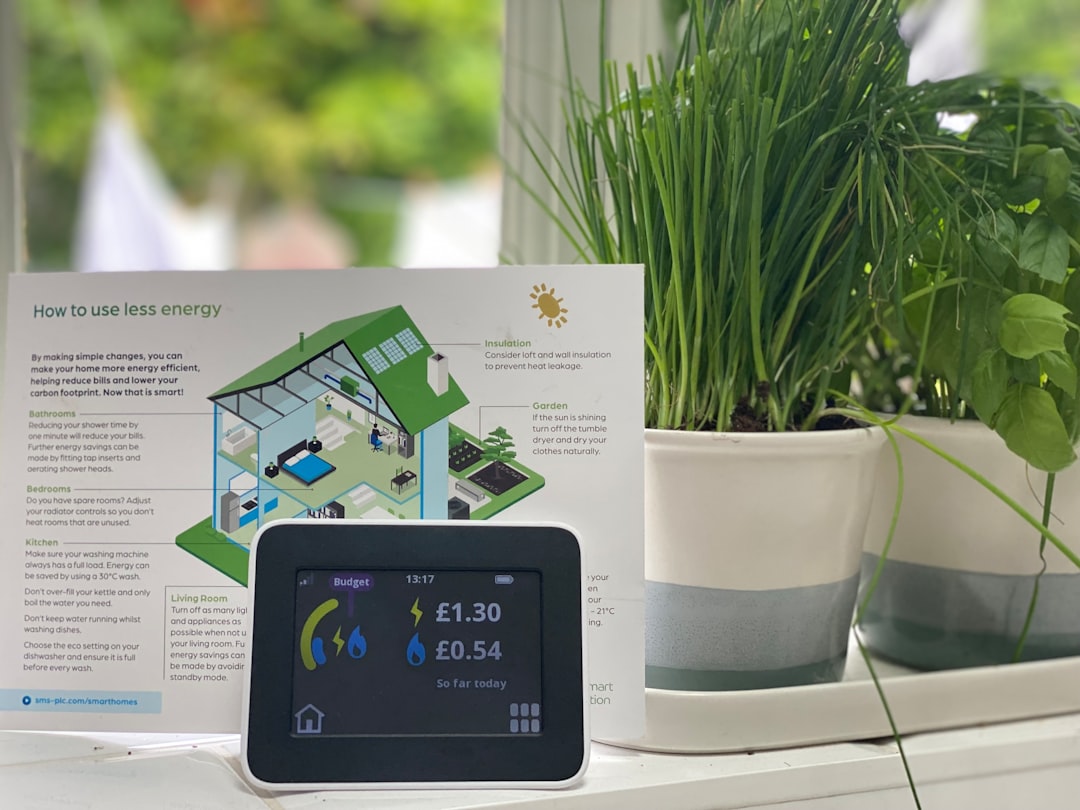
A home energy monitor clamps current transformers around your main service wires or individual circuits and reports usage every few seconds. According to ENERGY STAR's Smart Home Energy Management Systems program, certified systems integrate monitors with smart thermostats, lighting, and plug loads to automatically control devices based on occupancy and suggest actions from usage patterns. Visibility is the first step. Control is the second.
The NRDC's 2015 idle-load study, analyzing 70,000 Northern California homes via smart meter data, found that inactive devices account for nearly 23 percent of average household electricity consumption — roughly $165 per year at national average rates, and up to $440 under top-tier tariffs. Consumer electronics alone represent 51 percent of that always-on draw. A monitor turns invisible drain into a numbered line item.
The Best Home Energy Monitors Compared
Which monitor fits your house depends on what you want to know: device names or circuit numbers. Two philosophies, one electrical panel.
Emporia Vue 3: Circuit-Level Precision at Low Cost
The Emporia Vue places CT clamps on up to 16 individual 50-amp circuits plus both 200-amp mains. Pricing runs $100 to $200 with no subscription. Emporia reports that average customers save about 10 percent on monthly electric bills after installation. As EnergySage notes, most home energy monitors sell for $300 or less, making Emporia the value leader for granular data.
Joel Rosenberg of Rewiring America, cited by EnergySage, puts the case plainly: monitors provide insight into home energy use "that isn't available any other way." One Emporia user quoted on the company's site identified an upstairs AC unit and garage refrigerator consuming 40 percent of total usage within days of install.
Sense: AI Device Detection With Minimal Wiring
Sense clamps onto two main service wires and samples voltage at 1 MHz — four million data points per second — using machine learning to identify appliances over two to four weeks. At $299, it costs roughly 50 percent more than a fully loaded Emporia, per Watt Wise's 2026 comparison. Active Sense users save an average of $300 to $400 per year by identifying energy hogs and changing behavior.
A PNNL and EIA study cited in Sense's technical documentation found that across 1,263 homes, Sense kWh estimates reached 95 percent of smart-thermostat ground-truth measurements on aggregate, with "better overall accuracy and fewer homeowner obligations" than two competing products.
Span Smart Panel: Monitor Plus Control
Span replaces your electrical panel entirely at $5,500 to $6,500 installed. It adds circuit-level load control — not just visibility. This is not a weekend DIY project. It is infrastructure.
How Monitoring Saves Money — The 20 Percent Mechanism
Behavior change without data is guesswork. Data without behavior change is a dashboard you ignore.
The savings pathway has three stages. First, identify waste: phantom loads, oversized HVAC cycles, redundant refrigerators. NRDC's research quantifies the idle-load category alone at 23 percent of consumption. Second, shift timing: run dishwashers, EV chargers, and water heaters during off-peak windows when your utility charges less. Third, upgrade or eliminate: replace the appliance that the monitor proves is inefficient, not the one you assume is guilty.
Emporia users report roughly 10 percent bill reduction. Watt Wise estimates payback at two to six months based on $20 to $60 per month of discovered waste. This is not to say every household hits 20 percent immediately. The National Laboratory of the Rockies' foresee HEMS platform — a research-grade system integrating HVAC, water heater, battery, and solar coordination — demonstrated 5 to 12 percent whole-home energy cost savings using machine-learning algorithms that predict consumption from occupant schedules. When integrated with a Span smart panel under DOE-funded testing, foresee achieved 10.4 percent energy savings and 44.4 percent energy cost savings on a typical summer day under time-of-use rates in a simulated 1,690-square-foot Dallas home, exceeding the project's 10 percent cost-savings target per the U.S. Department of Energy peer review.
Consumer-grade monitors deliver a subset of that capability because they provide the visibility foresee assumes you already have. You find the 40-percent AC problem. You schedule the dryer for off-peak hours. You unplug the entertainment center drawing 15 watts around the clock.
Can You Install a Home Energy Monitor Yourself?
What if the installation requires opening a live electrical panel? Then you decide whether your skill matches the risk.
Both Sense and Emporia require work inside the breaker box. Sense needs two clamps on the main service wires, a dedicated 240-volt breaker, and an antenna knockout — roughly 15 to 20 minutes for experienced DIYers. Emporia requires one clamp per circuit you want to track, typically 60 to 90 minutes for a 16-circuit panel. Emporia's hardware is UL and CE listed for panel installation.
The critical rule for any CT clamp: clip around one hot conductor only. A clamp around a full Romex cable measures zero because opposing magnetic fields cancel. Split-core clamps allow installation without disconnecting wires, but exposed bus bars carry lethal current. Turn off the main breaker before opening the panel cover. If you are not comfortable inside a live panel after restore, hire a licensed electrician. The monitor costs $100 to $300. Your safety does not have a payback period.
Which Monitor Works Best With Solar Panels?
Solar changes the question from "how much did I use" to "how much did I produce, consume, and export." Net metering requires all three numbers.
Emporia Vue includes dedicated solar CT clamps that track production alongside consumption, showing net usage in real time. Sense offers a solar-specific model with additional sensors, though circuit-level overlap can reduce precision when multiple large loads run simultaneously. For homes on time-of-use or net-energy-metering 3.0 plans, circuit-level solar integration matters because self-consumption — using your own production before exporting to the grid — directly reduces bill impact.
The DOE's foresee smart-panel demonstration coordinated solar production with HVAC and water heater scheduling to maximize self-consumption during peak solar hours. A standalone Emporia or Sense monitor gives you the production and consumption data to manually replicate that logic: run the pool pump when panels peak, delay the EV charger until surplus exceeds load.
How Accurate Are Home Power Monitors?
Accuracy is not one number. It depends on what you measure and how you measure it.
Circuit-level monitors like Emporia measure the specific wire carrying current. They are accurate from the first second because they do not infer — they count electrons on a named circuit. Sense infers device-level usage from aggregate signatures, which improves over two to four weeks but may miss small loads or confuse similar appliances on shared circuits.
The PNNL/EIA study across 1,263 homes validated Sense at 95 percent aggregate accuracy against thermostat ground truth. Emporia advertises utility-grade accuracy for individual circuits. Neither replaces a utility revenue meter for billing disputes, but both exceed the precision needed to identify a refrigerator consuming 200 watts continuously or an HVAC cycle running 40 minutes per hour.
Choosing Your Monitor and Next Step
A power monitor is not a subscription to savings. It is a measurement instrument that makes waste visible so you can eliminate it. Choose Emporia if you want circuit-level certainty, solar tracking, and the lowest cost. Choose Sense if you want minimal wiring and AI-driven device names. Choose Span if you are replacing your panel anyway and want automated load control.
Install the monitor, wait one billing cycle, and identify the single circuit or device responsible for the largest unexplained draw. Fix that one item first. The mechanism is sequential: measure, prioritize, act. Everything else follows from the first number you could not see before.