
Best Places to Cater Food From: Compare Costs and Menus
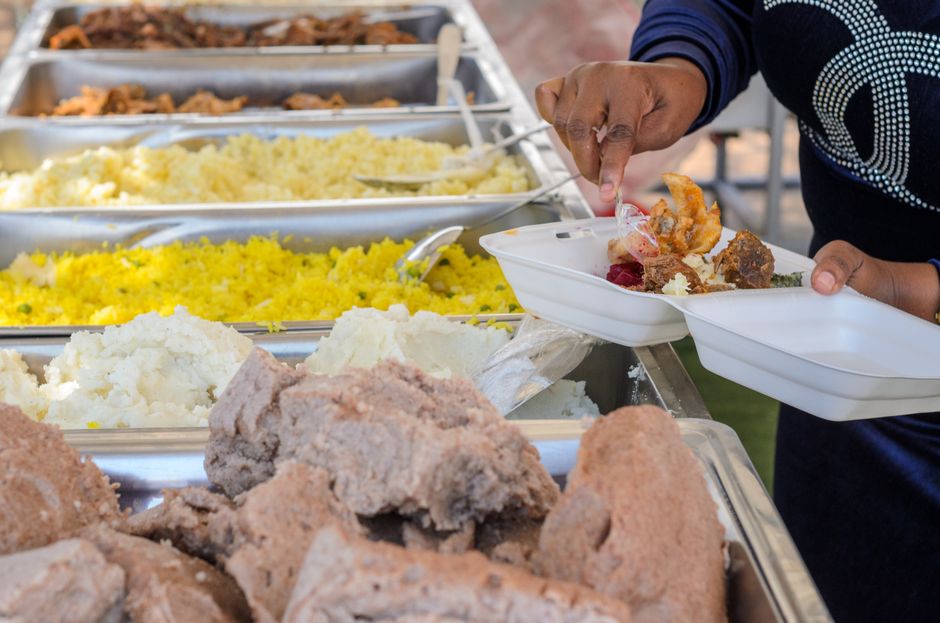
The best places to cater food from depend on your guest count, service needs, and menu priorities: grocery-store trays and restaurant drop-off can suit budget-conscious casual meals, while local caterers and full-service providers offer more flexibility for complex menus and event logistics. Compare written, all-in quotes—including minimums, delivery, setup, tax, and service fees—before choosing.
What is the cheapest place to cater food from?
Grocery-store trays or restaurant drop-off may be the lowest-cost fit for a casual meal, but available sources do not establish which is cheapest in every area. The useful comparison is the final quote for the same menu, headcount, and service level—not a starting price or food-only estimate.
Fash reports drop-off catering at $10–$28 per person and full-service catering at $30–$100 per person, excluding alcohol. For 100 guests, its estimates are $1,000–$3,500 for food-truck or drop-off catering and $3,000–$15,000 for formal buffet, stations, or plated service. These ranges describe different service formats; they do not establish a universal grocery-store or restaurant price.
Ask every provider for an itemized total. Fash says added costs can include minimums, an 18%–22% service fee, a 15%–20% gratuity, tax, menu add-ons, and travel charges. Ask: “What is the complete total for this menu and headcount, including delivery, setup, tax, and every fee?” That makes unlike quotes easier to compare.
| Option | Who it suits | Cost information in sources | Key limitation |
|---|---|---|---|
| Restaurant catering | Casual meals and workplace orders; confirm the location can serve the group | Restaurant-specific prices not published | Menu flexibility, minimums, and capacity not published |
| Local caterer | Events needing tailored menus or service; verify the specific provider | Local-provider prices not published | Licensing, staffing, and availability require direct confirmation |
| Grocery-store trays | Simple gatherings where ready-made trays suit the menu | Prices and minimums not published | Menu flexibility and event services not published |
| Delivery platform | Workplace orders where delivery coordination and meal choice matter | Platform-specific pricing and fees not published | ezCater findings represent workplace orders and its surveyed population, not all catering customers |
| Food-truck or drop-off catering | Casual events that do not require full-service staffing | $10–$28 per person; $1,000–$3,500 for 100 guests in Fash estimates | Estimates exclude alcohol; added charges may apply |
| Full-service catering | Formal meals, plated service, stations, or events needing more coordination | $30–$100 per person; $3,000–$15,000 for 100 guests in Fash estimates | Estimates exclude alcohol; added charges may apply |
Who has the best catering menu?
The best catering menu is the one that fits the occasion, dietary needs, and serving setup—not necessarily the longest menu. A restaurant may offer familiar favorites, a grocery store may provide convenient trays, and a local caterer may be worth considering when the event needs a tailored or made-from-scratch menu. The provided sources do not compare specific providers or verify which menus are made from scratch, so confirm that directly.
For an office lunch, individual choice and packaging can reduce friction. In ezCater’s 2024 workplace report, 71% of surveyed employees preferred selecting their own meals when employers provided food, and 64% preferred individually packaged meals. The report surveyed restaurant operators, workplace food orderers, and employees and combined survey responses with ezCater transaction data; it should inform workplace planning, not be treated as a universal preference.
Use a short menu check before ordering:
- Dietary needs: Send allergy information in advance and ask how vegan, vegetarian, and gluten-free options are handled.
- Serving format: Confirm whether food arrives as trays, individually packaged portions, buffet service, or plated meals.
- Portions: Ask what each listed serving means and how many portions are included.
- Lead time and changes: Confirm the order deadline, guest-count cutoff, and substitution policy; these details are not standardized in the sources.
Penn State Extension distinguishes a food portion—the amount served—from a standard serving on a nutrition label. That distinction matters when comparing menus: ask providers for their actual catering portion size rather than assuming a nutrition-label serving equals a full event meal.
What is the cheapest food to feed 100 people?
The available sources do not identify a single cheapest food for 100 people. They do provide a useful budget range by service type: Fash estimates $1,000–$3,500 for food-truck or drop-off catering and $3,000–$15,000 for formal buffet, stations, or plated service for 100 guests, before the additional charges its guide lists.
To build a workable estimate, choose the service format first, then price the menu and fees together. A lower food estimate can lose its advantage once delivery, service, gratuity, tax, travel, setup, or minimum-order costs are included. Ask for one quote with the same guest count, menu, and service details from each candidate.
For quantities, Iowa State University Extension and Outreach’s AnswerLine estimates 2–3 ounces of main protein per adult for a holiday meal, with half portions for children. Its side estimates per adult include 1.5 ounces of grain, 4 ounces of vegetables, 5 ounces of potatoes, or 2 ounces of beans; it also gives 1 cup per person for salad or soup, 1–2 bread portions, and 1.5 dessert pieces. These are planning estimates for a holiday meal, not a rule for every menu. Ask the caterer to translate its own serving sizes into quantities for your guest mix.
Which restaurants cater for a birthday party?
Restaurants that cater for a birthday party are the ones whose location confirms it can handle the headcount, delivery window, menu, and serving arrangement. The provided sources do not list restaurant names or verify local catering availability, so check directly with nearby national chains and independent restaurants rather than assuming every location offers catering.
For a casual birthday, ask whether the restaurant can provide shareable trays or individually packaged meals, and whether delivery and setup are included. For a formal event or a menu that needs substantial customization, compare local caterers and full-service options as well. A directory listing alone may not establish staffing, food preparation arrangements, or capacity for your date.
Before booking, use a logistics check. Ask where the food is prepared, how it will be transported and stored, when it will be served, and whether temperatures will be monitored. The USDA Food Safety and Inspection Service advises selecting a caterer with required food licensing and food-safety-trained or certified staff. It says hot food should be held above 140°F and cold food at or below 40°F; perishable food should not remain at room temperature for more than two hours, or one hour above 90°F. For a buffet, review how to set up a buffet that keeps hot and cold food safe.
For a large gathering, confirm capacity and logistics before choosing on price alone. If guests will eat buffet-style, planning the group’s arrival and seating can also matter; see whether a large group should walk into a buffet or reserve. The goal is a provider that can deliver the agreed portions safely at the time and place you need them.
Frequently Asked Questions
Is restaurant catering cheaper than hiring a local caterer?
It can be, especially when comparing restaurant drop-off with full-service catering, but the sources do not publish a direct restaurant-versus-local-caterer price comparison. Fash reports drop-off catering at $10–$28 per person and full-service catering at $30–$100 per person; request itemized quotes to compare equivalent menus and service.
How much food should I order per person for a catered event?
There is no single portion that fits every menu or event. Iowa State Extension’s holiday-meal estimates include 2–3 ounces of main protein per adult, 1 cup of salad or soup, and 1–2 bread portions; use the provider’s serving sizes and guest mix to adapt the quantities.
How can I compare catering prices, delivery fees, and minimum orders?
Ask each provider for an itemized written quote covering food, minimum order, delivery, setup, tax, service fee, gratuity, travel, and add-ons. Compare the final total for the same headcount, menu, packaging, and service level, and confirm what happens if the guest count changes.
Sources
Keep reading

How Do I Set Up a Buffet That Keeps Hot and Cold Food Safe?
Set up a safer party buffet with clear hot and cold holding temperatures, time limits, small-batch serving, and leftover rules.

How Do I Compare London Construction Quotes and Choose a Qualified Contractor?
Compare London renovation quotes, check contractor credentials and use written terms to control costs before work starts.
Who Approves Food Labels When You Outsource Packaging?
A practical approval workflow for small food brands using co-packers, designers, and label suppliers without losing control of compliance.

What Bottled Water Should I Use in My Espresso Machine?
Learn how to read bottled-water labels for calcium, magnesium, bicarbonate, TDS, scale risk, and balanced espresso flavor.