AI Medical Diagnostics: What the Evidence Shows
On a Tuesday morning in 2024, a breast radiologist in South Korea's national screening program opened her workstation and faced the same stack of mammograms she had read for fifteen years. The difference was a thin software layer running beside her viewer, flagging suspicious tissue the human eye might miss on a long shift. She did not hand the decision to the machine. She used it to see more clearly. That single workflow change, replicated across 24,543 women in the AI-STREAM prospective study published in Nature Communications in 2025, produced 17 additional cancers detected without raising recall rates. The pattern is not magic. It is mechanism: pattern recognition at scale, paired with a physician who retains final authority.
This article answers five questions patients and clinicians ask with increasing urgency. How accurate is AI at diagnosing disease. Whether it will replace radiologists and pathologists. Which tools hospitals actually deploy. How machine learning finds cancer earlier. And where the technology still fails.
How Accurate Is AI at Diagnosing Disease?
How do you measure accuracy when the stakes are a missed malignancy or an unnecessary biopsy. You count cancers found, false alarms avoided, and whether those numbers hold outside a laboratory.
The AI-STREAM study, led by Chang and colleagues and published in March 2025, tracked 24,543 women across South Korea's screening program. Radiologists using AI-based computer-aided detection found 5.70 cancers per 1,000 exams versus 5.01 without AI, a 13.8% improvement (p < 0.001). Recall rates did not rise significantly (p = 0.564). Positive predictive value climbed from 11.2% to 12.6%. These are not abstract percentages. They represent 17 women whose cancers a standard read might have missed.
The picture broadens across cancer types. A 2025 systematic review in Cancer Research, published by the American Association for Cancer Research, found AI consistently matching or surpassing clinician accuracy across imaging modalities. A deep learning mammography system tested on 76,000 screening exams cut false positives by 5.7% and false negatives by 9.4% compared to unaided radiologists. In lung cancer, a 3D convolutional neural network trained on 42,290 CT scans achieved an area under the curve of 0.94 for nodule malignancy prediction, outperforming radiologists when prior imaging was unavailable.
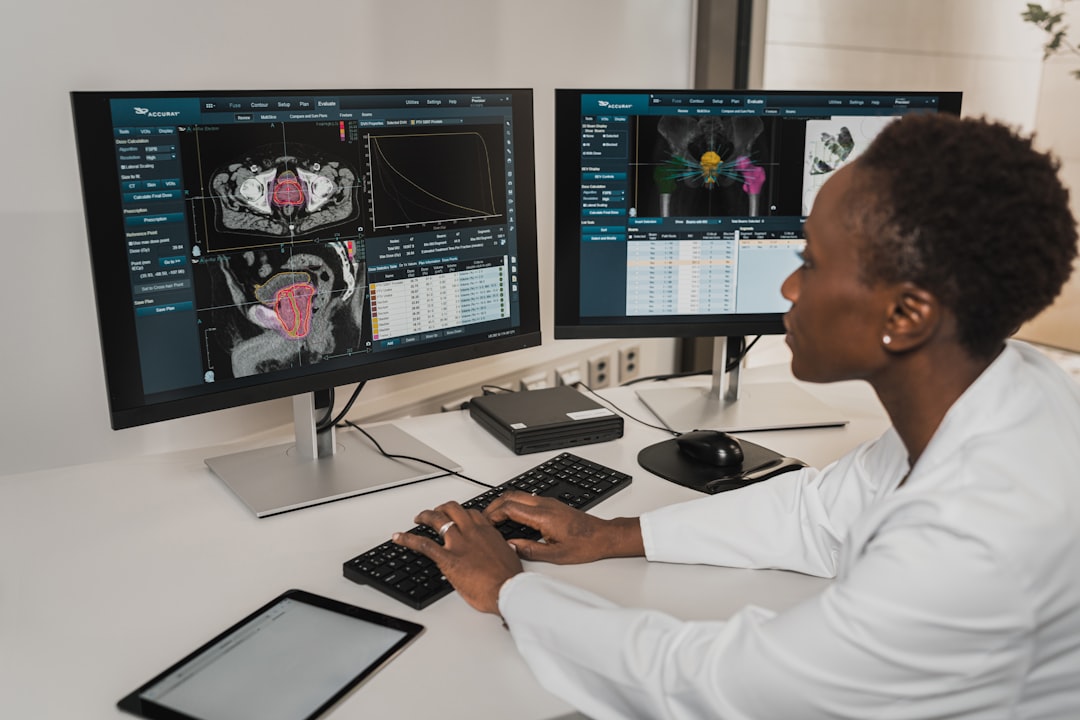
This is not to say every authorized device performs at that level. A 2025 analysis in npj Digital Medicine scored 1,012 FDA-reviewed AI devices on transparency across 17 categories and found a median ACTR score of just 3.3 out of 17. Median reported sensitivity was 91.2% and specificity 91.4%, but 51.6% of devices reported no performance metric at all. Accuracy on paper and accuracy in your local hospital are not the same measurement.
Will AI Replace Radiologists and Pathologists?
Will the reading room empty out. Will pathologists become obsolete. The professionals who work inside those rooms say no, and their reasoning reveals the actual division of labor.
Researchers at University Medical Center Utrecht interviewed 21 specialists, seven pathologists, ten radiologists, and four computer scientists, publishing their findings in JMIR Human Factors in 2024. Both groups agreed AI had yet to live up to its hype. Radiologists and pathologists valued AI for repetitive, time-consuming tasks but doubted its capacity for context-dependent diagnoses that require clinical history, prior imaging, and institutional knowledge. Every respondent wanted AI to perform primary analysis while the medical specialist made the final judgment and bore legal responsibility. Most did not expect fundamental role changes within the next decade.
AI does not replace clinical reasoning. AI replaces the hours spent hunting for what clinical reasoning requires. The definitional pivot is straightforward: the radiologist is not becoming obsolete. The radiologist is becoming accountable for a larger volume of verified findings.
What AI Diagnostic Tools Are Hospitals Using Now?
Which devices have regulatory clearance, and where do they concentrate.
According to the U.S. Food and Drug Administration, the agency maintains a public list of AI-enabled medical devices authorized for marketing in the United States, updated periodically with device names, manufacturers, and regulatory pathways. By the end of 2025, the FDA had authorized 1,451 AI and machine learning-enabled devices cumulatively, up from six in 2015. In 2025 alone, 295 devices cleared from 221 unique manufacturers, with a median clearance time of 142 days.
Radiology dominates the landscape. Approximately 76% of all authorizations, 1,094 of 1,430 cumulative devices, fall under the radiology panel. Cardiovascular accounts for 9.5% and neurology for 4.5%. Recent clearances include systems like BioticsAI for mammography, Siemens MAGNETOM MRI platforms with embedded AI reconstruction, and Philips ultrasound AI. Over 96% of devices enter the market through the 510(k) pathway, demonstrating substantial equivalence to existing devices rather than undergoing full de novo clinical trials.
The FDA states it encourages the development of innovative, safe, and effective medical devices, including those incorporating artificial intelligence. That encouragement has produced volume. Whether it has produced uniform clinical validation is a separate question.
How Machine Learning Detects Cancer Earlier
Where does early detection actually happen in the pipeline, and what does the data show at the tissue level.
Breast cancer offers the clearest case study. A 2025 study in Insights into Imaging from Springer Nature tested a multi-view convolutional neural network across validation and testing sets, achieving AUC values of 0.995, 0.933, and 0.947 for malignancy diagnosis. Within BI-RADS 3-4 subgroups, the system downgraded 83.1% of false positives to benign categories and upgraded 54.1% of false negatives to malignant. In a counterbalanced reader study of 1,302 cases, AI-assisted radiologists improved average AUC significantly (p = 0.001). The system identified 7 of 43 malignancies initially classified as BI-RADS 0, incomplete assessment, while maintaining 96.7% specificity.
Machine learning in cancer detection works through a repeatable mechanism. Models train on thousands of labeled images, learning statistical associations between pixel patterns and pathology outcomes. At deployment, they score new cases against those learned associations, surfacing anomalies that fall below human perceptual thresholds on a given day. The Cancer Research review confirms this pattern holds across cancer types, though most studies still lack real-world clinical validation and integration with genomic data remains weak.
Where AI Diagnostics Still Falls Short
What breaks when you move from clearance documents to clinic floors.
A 2025 analysis in JAMA Network Open examined 903 FDA-cleared AI-enabled devices and found only 55.9% had publicly available clinical performance data at clearance. Among those with studies, 38.2% used retrospective designs, only 8.1% were prospective, and just 2.4% used randomized clinical designs. Forty-three devices, 4.8%, were recalled after approval, with an average recall time of 1.2 years post-clearance. Sensitivity, specificity, and AUC were reported for only 36.2%, 34.9%, and 16.2% of devices respectively.
Bias compounds the validation gap. Researchers at Yale School of Medicine, writing in PLOS Digital Health, documented how bias can emerge at every pipeline stage: data collection, model development, evaluation, deployment, and publication. Most training datasets overrepresent non-Hispanic Caucasian patients. Over 50% of published clinical AI models use data from only the United States or China. Melanoma detection models trained on predominantly light-skinned images perform worse on darker skin tones, mirroring existing diagnostic disparities. Left unaddressed, biased medical AI perpetuates the very inequities it could theoretically reduce.
Transparency remains inadequate even after regulatory guidance. The npj Digital Medicine review found ACTR scores improved only 0.88 points after the FDA's 2021 Good Machine Learning Practice guidelines. The study's authors concluded these findings highlight transparency gaps and emphasize the need for enforceable standards to ensure trust in AI medical technologies.
Where AI Diagnostics Is Heading in Five Years
What changes are structurally likely, and what remains speculative.
Three trajectories follow from current evidence. First, radiology AI will continue expanding through the 510(k) pathway, with Predetermined Change Control Plans allowing manufacturers to update models without resubmitting for every iteration. Second, prospective validation will grow slowly but remain the exception rather than the rule, as the JAMA analysis documents. Third, pathologists and radiologists will increasingly treat AI as a mandatory second reader for high-volume screening, not an optional assistant, because the AI-STREAM and German PRAIM real-world implementations demonstrate measurable detection gains without recall inflation.
The professionals interviewed at Utrecht did not expect fundamental role changes within ten years. They expected task-specific augmentation: AI handles triage and flagging; physicians handle integration, communication, and accountability. That division aligns with what regulators authorize and what hospitals can legally deploy.
AI in medical diagnostics is not a replacement technology. It is an amplification technology whose value depends entirely on who holds the final read and whether the training data represents the patients walking through the door. Verify the device on the FDA list. Ask whether your hospital ran prospective validation locally. Treat the algorithm as a tool that extends perception, not a authority that replaces it.