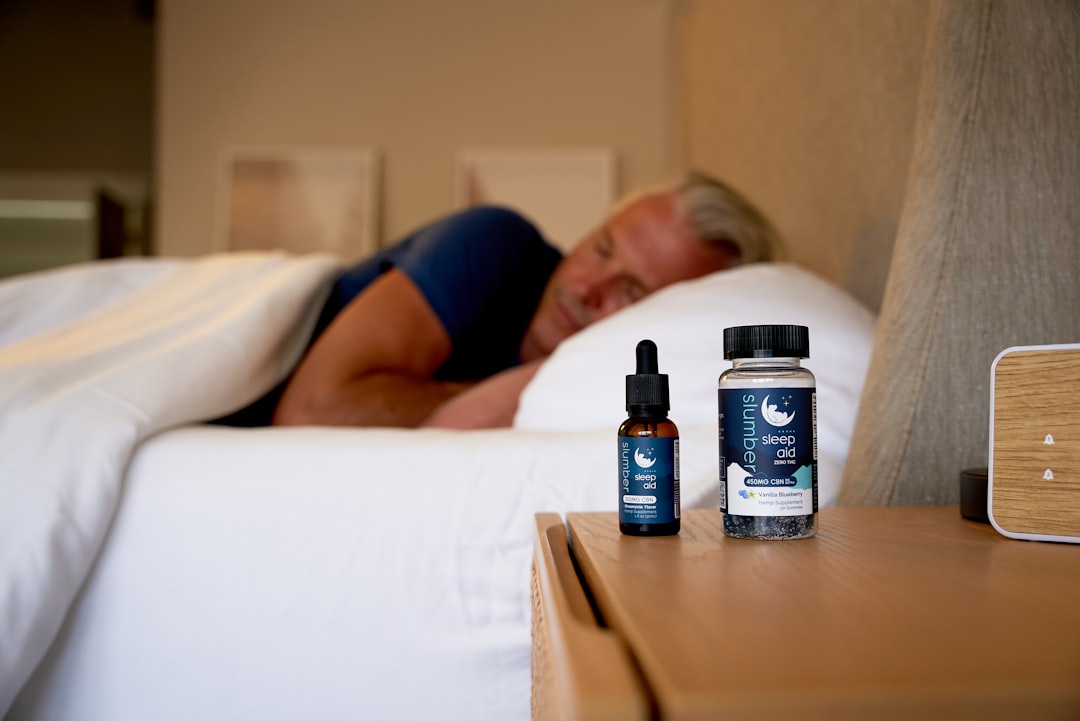
At 2:47 a.m., a software engineer named Marcus opened his phone for the third time that night. He had tried melatonin from a friend, magnesium from a podcast, and ashwagandha from a Reddit thread. Each supplement promised rest. None delivered a mechanism he could verify. The problem was not laziness. The problem was that he treated sleep aids like lottery tickets rather than tools with specific biological targets.
This article ranks four of the most studied natural sleep supplements — magnesium glycinate, melatonin, L-theanine, and ashwagandha — by the strength of their evidence, names the dosages that trials actually used, and explains which combinations make sense for which sleep problems. You will learn what science supports, what it does not, and why some supplements leave you groggy at dawn.
Which Natural Sleep Supplement Has the Most Evidence?
What counts as "best" depends on what fails first: falling asleep, staying asleep, or waking unrested. A 2024 literature review by Yeom and Cho in Psychiatry Investigation surveyed valerian, hops, melatonin, magnesium, L-theanine, and others. They found the strongest pooled evidence for valerian, hops, and melatonin in reducing insomnia symptoms. Melatonin has the deepest research archive. Ashwagandha and L-theanine carry growing but narrower evidence bases focused on specific sleep dimensions.
Melatonin is not a sedative. Melatonin is a circadian signal. A 2024 dose-response meta-analysis by Cruz-Sanabria and colleagues in the Journal of Pineal Research pooled 26 randomized trials with 1,689 participants and found that melatonin gradually reduces sleep onset latency and increases total sleep time, peaking at 4 mg per day. Advancing administration to three hours before desired bedtime proved significantly more effective than the common 30-minute-before schedule. The National Center for Complementary and Integrative Health (NCCIH) notes that melatonin reduced time to fall asleep by roughly 22 minutes in delayed sleep-wake phase disorder patients and supports efficacy for jet lag. This is not to say melatonin solves chronic insomnia. The American Academy of Sleep Medicine (2017) and American College of Physicians (2016) found insufficient evidence to recommend melatonin for chronic insomnia, with cognitive behavioral therapy for insomnia (CBT-I) as the first-line treatment.
Does Magnesium Glycinate Really Help With Sleep?
Does a mineral deficiency explain poor sleep, or does glycine add a separate mechanism? Schuster and colleagues addressed this in a 2025 randomized, double-blind, placebo-controlled trial published in Nature and Science of Sleep with 155 adults aged 18 to 65 reporting poor sleep quality. Participants received 250 mg elemental magnesium as bisglycinate plus 1,523 mg glycine daily for four weeks, or placebo.
The magnesium bisglycinate group showed a significantly greater reduction in Insomnia Severity Index scores than placebo: −3.9 versus −2.3 points (p = 0.049). Cohen's d was 0.2 — a small but statistically meaningful effect. ISI scores fell 28% in the magnesium group versus 18% in placebo. Most improvement occurred within the first 14 days. Participants with lower baseline dietary magnesium intake showed greater improvements (Spearman's rho = −0.25, p = 0.036). Fewer side effects occurred in the magnesium group than placebo, with no serious adverse events.
"Magnesium bisglycinate supplementation modestly improved insomnia severity in adults reporting poor sleep quality. The effect size for ISI reduction was small (d = 0.2), indicating a modest but potentially meaningful treatment effect."
Magnesium glycinate is not a knockout sedative. Magnesium glycinate is a low-risk correction for a population that may be under-supplied. Yeom and Cho's review also cited an older trial showing 500 mg magnesium daily for eight weeks increased sleep time and efficiency while reducing ISI scores and serum cortisol in older adults. If your diet is magnesium-poor, glycinate at 250 mg elemental magnesium daily is the dosage backed by the strongest recent RCT.
How Much Melatonin Should You Take for Sleep?
How do you know whether 10 mg from a drugstore bottle is medicine or miscalculation? Cruz-Sanabria's meta-analysis provides a dose-response curve rather than a single magic number. Melatonin at 3 mg and 4 mg per day significantly outperformed 2 mg for reducing sleep latency. Total sleep time gains also favored 3 mg over 2 mg. The curve peaks at 4 mg daily for both latency and duration.
Timing matters as much as dose. Taking melatonin three hours before desired bedtime produced significantly better latency reduction than taking it 30 minutes before bed. Insomnia status predicted response magnitude — people with diagnosed insomnia showed larger latency improvements than those without.
The NCCIH raises a separate concern: label accuracy. A 2017 study of 31 melatonin supplements found most did not match labeled melatonin content, and 26% contained serotonin, a hormone with harmful effects even at low levels. Pediatric poison control reports for melatonin ingestion rose from 8,337 in 2012 to 52,563 in 2021, with roughly 11,000 emergency department visits for unsupervised ingestion by children five and under between 2019 and 2022. For adults, short-term use appears safe for most people, but long-term safety data remain limited because melatonin is a hormone that could theoretically affect hormonal development.
Is L-Theanine Better Than Melatonin for Sleep?
L-theanine does not compete with melatonin on the same axis. Melatonin shifts circadian timing. L-theanine quiets the arousal system without directly inducing sleep. Cotter and colleagues published a 2025 systematic review in Nutritional Neuroscience examining 13 trials with 550 participants using L-theanine doses from 50 to 900 mg daily. Supplementation with 200 to 450 mg per day appeared safe and effective for supporting healthy sleep in adults, with positive effects on sleep latency, maintenance, efficiency, perceived satisfaction, and feelings of refreshment on waking. Little evidence showed L-theanine increases total sleep time.
A separate 2025 meta-analysis of 19 studies with 897 participants confirmed that L-theanine significantly improved subjective sleep onset latency (SMD = 0.15, p = 0.04), daytime dysfunction (SMD = 0.33, p < 0.001), and overall subjective sleep quality (SMD = 0.43, p = 0.03). Effect sizes were small to medium.
Choose L-theanine when anxiety or mental hyperactivity blocks sleep. Choose melatonin when circadian misalignment — jet lag, shift work, delayed sleep phase — is the root cause. Movva and colleagues' 2026 head-to-head trial in Clocks & Sleep with 200 adults found ashwagandha 600 mg and melatonin 3 mg produced moderate but comparable benefits as monotherapies across objective and subjective measures. Neither dominated the other because they address different failure modes.
Can Ashwagandha Help With Insomnia?
Can a root extract reduce the cortisol that keeps you awake at midnight? Cheah and colleagues' 2021 meta-analysis in PLOS ONE pooled five RCTs with 400 participants and found ashwagandha extract produced a small but significant effect on overall sleep (SMD −0.59; 95% CI −0.75 to −0.42). Effects were more prominent in adults diagnosed with insomnia, at dosages of 600 mg per day or higher, and treatment durations of eight weeks or longer. Ashwagandha also improved mental alertness on rising and reduced anxiety. No serious side effects appeared across trials; mild events included headache, acid reflux, and allergic dermatitis.
Movva's 2026 comparative RCT assigned 200 adults to ashwagandha 600 mg, melatonin 3 mg, combination therapy, or placebo for eight weeks. Combination therapy produced the greatest improvements: sleep onset latency fell roughly 21 minutes versus 7 minutes with placebo, total sleep time increased 56 minutes, and sleep efficiency rose 10.5 percentage points (all p < 0.0001). Ashwagandha and melatonin monotherapies produced moderate, comparable benefits. Mild adverse events — nausea, headache — occurred in 6% of the ashwagandha group, 10% of melatonin, 12% of combination, and 6% of placebo.
Ashwagandha requires patience. Eight weeks at 600 mg daily is the threshold where meta-analytic effects concentrate. This is not a same-night fix. It is a stress-axis intervention that gradually lowers the physiological cost of staying awake.
How to Stack Supplements for Different Sleep Problems
What if your problem is latency, maintenance, or morning fog — and how do you match a stack to the failure?
Cannot Fall Asleep (High Latency)
Start with melatonin 3 to 4 mg taken three hours before desired bedtime, per Cruz-Sanabria's dose-response data. If racing thoughts persist, add L-theanine 200 to 400 mg one hour before bed. Cotter's review supports this range for latency and maintenance without sedation hangover at typical doses.
Stress-Driven Insomnia
Begin ashwagandha 600 mg daily for at least eight weeks. Cheah's meta-analysis shows insomnia-diagnosed adults respond most strongly at this dose and duration. If latency remains elevated after four weeks, consider adding melatonin 3 mg — Movva's trial showed the combination outperformed either agent alone.
Poor Sleep Quality Without Clear Insomnia
Try magnesium bisglycinate at 250 mg elemental magnesium daily. Schuster's 2025 trial targeted adults with self-reported poor sleep rather than clinical insomnia diagnoses. Participants with lower dietary magnesium intake benefited most.
Jet Lag or Shift Work
Melatonin carries the strongest evidence here. The NCCIH supports melatonin for eastward and westward travel. Take 3 to 4 mg timed to the target sleep window in the new time zone, advanced three hours before desired bedtime when possible.
Safety, Long-Term Use, and Morning Grogginess
Which supplements can you use for months, and which ones punish you at sunrise?
Long-term safety profile: L-theanine at 200 to 450 mg daily showed safety across Cotter's 13-trial review. Magnesium bisglycinate produced fewer side effects than placebo in Schuster's four-week trial, though trials beyond four weeks are limited. Ashwagandha showed no serious adverse events in Cheah's meta-analysis, but long-term safety data remain insufficient. Melatonin appears safe short-term for most adults, yet the NCCIH explicitly notes lacking long-term safety data and recommends caution because it is a hormone.
Drug interactions and quality concerns: Ashwagandha may interact with thyroid medications, sedatives, and immunosuppressants. Magnesium can interfere with certain antibiotics and bisphosphonates if taken concurrently. Melatonin may amplify sedative effects of alcohol and CNS depressants. Yeom and Cho emphasize that supplement quality varies widely due to limited FDA regulation — consumers should choose third-party tested products. The NCCIH's finding that 26% of tested melatonin supplements contained serotonin underscores why label trust is a safety issue, not a marketing detail.
What causes morning grogginess? Melatonin at doses above 4 mg, or taken too close to wake time, frequently produces next-day sedation because residual hormone suppresses the morning cortisol rise. High-dose melatonin is a timing error disguised as a dose error. L-theanine rarely causes grogginess because it modulates glutamate and GABA without direct hypnotic action. Ashwagandha's grogginess risk is low; Movva's trial reported mild headache and nausea, not sedation hangover. Magnesium glycinate at 250 mg elemental dose showed fewer side effects than placebo in Schuster's trial.
What Reddit Recommends Versus What Science Supports
Reddit threads cluster around three recommendations: 10 mg melatonin, magnesium glycinate before bed, and ashwagandha for "calming the nervous system." Science partially confirms and partially corrects each claim.
Reddit favors high-dose melatonin. Cruz-Sanabria's curve peaks at 4 mg — not 10 mg. Higher doses increase grogginess risk without proportional benefit. Reddit praises magnesium glycinate as a same-night fix. Schuster's data supports modest ISI improvement, but Cohen's d of 0.2 signals realistic expectations, not transformation. Reddit treats ashwagandha as fast-acting. Cheah's meta-analysis shows effects concentrate at eight weeks and 600 mg daily — patience the platform rarely models.
Where Reddit and science align: combination therapy. Movva's 2026 trial validated what anecdotal stacking suggested — ashwagandha plus melatonin produced the largest objective gains. The mechanism is complementary: one lowers stress-axis arousal, the other signals circadian readiness.
Conclusion: Match the Supplement to the Mechanism
The best natural sleep supplement is the one that addresses your specific failure mode. Melatonin 3 to 4 mg timed three hours before bed wins for circadian disruption. L-theanine 200 to 450 mg wins for anxiety-driven latency. Ashwagandha 600 mg for eight weeks wins for stress-related insomnia. Magnesium glycinate 250 mg elemental daily wins for mild sleep quality deficits, especially with low dietary magnesium. Start one supplement, verify the mechanism fits your problem, and use third-party tested products. Sleep improvement is not a lottery ticket. It is a targeted correction.