
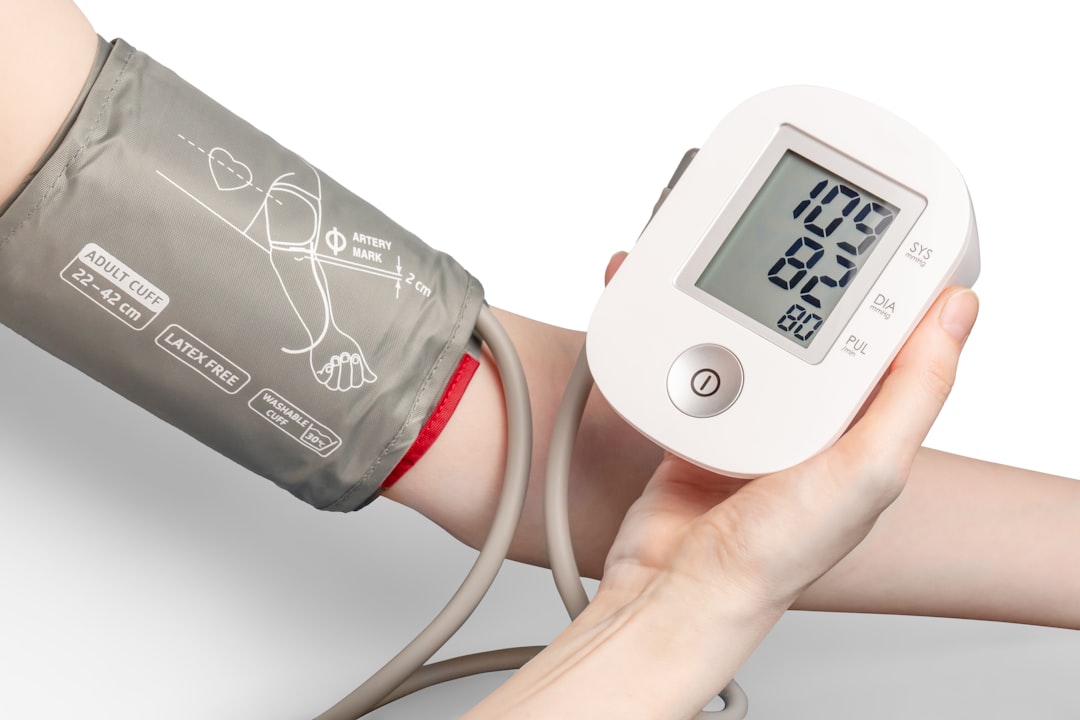
How to Choose an Accurate Home Blood Pressure Monitor
James Carter sat in his kitchen at 7:15 a.m., cuff strapped over a sweatshirt sleeve, and recorded 158/96. His doctor had told him to track at home. The number scared him. At his next visit, a nurse repeated the measurement with a properly sized upper-arm cuff on bare skin: 132/84. The monitor was not broken. The protocol was.
Home blood pressure monitoring works when you treat the device as a measurement system — validated hardware, correct cuff geometry, fixed timing, and a repeatable posture — not a single number on a screen. This guide answers the questions that actually determine whether your readings help or mislead: which monitors earn clinical trust, whether wrist cuffs belong in your home, how to size a cuff, the sitting protocol clinicians expect, and when a number demands a phone call.
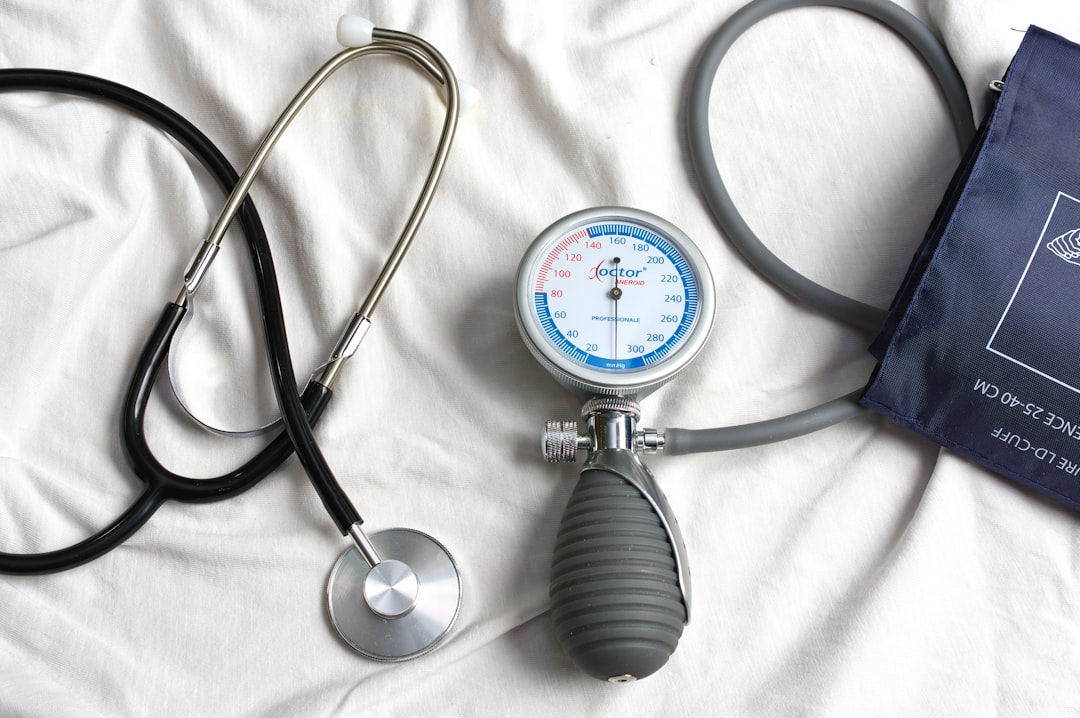
What Is the Most Accurate Home Blood Pressure Monitor?
Accuracy is not a brand slogan. It is a protocol result. The U.S. Blood Pressure Validated Device Listing, managed by an independent committee of 13 experts under the American Medical Association, lists devices that manufacturers submitted and reviewers tested against international standards. As of 2025, the list includes 57 or more clinically accurate devices — upper-arm monitors, select wrist cuffs, and ambulatory units. Clinical guidelines call for a validated upper-arm device for self-measured blood pressure. That is the baseline, not the ceiling.
The American Heart Association recommends an automatic, cuff-style, upper-arm monitor. Wrist and finger monitors are not recommended; they give less reliable readings. Dr. Karen Margolis, quoted in AHA News in 2022, described wrist devices as touchy: your arm must sit in exactly the right position. Upper arm cuff devices are preferred over wrist devices for the same mechanical reason a carpenter prefers a level on a flat surface rather than a pendulum on a hinge — stability reduces variance.
Among validated upper-arm options, two names surface repeatedly in 2026 comparisons. Omron Platinum (BP5450) ranks at the top in independent testing: Consumer Reports notes that arm monitors including the Omron Platinum are more accurate than wrist monitors they have tested, comparing each device against a mercury sphygmomanometer reference. Aggregated Reddit recommendations, summarized by RedRecs in 2026, show Omron arm cuffs dominating user endorsements for reliability and longevity — though users consistently advise verifying any home unit against a clinical reading.
Withings BPM Connect occupies a different niche. A 2022 validation study published in Vascular Health and Risk Management found the device passed the AAMI/ESH/ISO Universal Standard (ISO 81060-2:2018) with a mean difference of 0.6±5.3 mmHg for systolic pressure and 2.1±4.3 mmHg for diastolic pressure across 85 subjects with arm circumferences from 22 to 42 cm. The study authors concluded the device can be recommended for home measurements in the general population. Independent six-week household testing published in 2026 placed the Omron Platinum slightly ahead on within-sitting repeatability, with the Withings BPM Connect close enough that the gap is unlikely to matter clinically for most users.
Are Wrist Blood Pressure Monitors Accurate?
Wrist monitors are accurate under constraint, not by default. The Validate BP listing includes some validated wrist cuffs, but guidelines restrict their use: wrist cuffs may only be used when upper-arm cuffs are unsuitable because of arm size or medical conditions. The Target:BP initiative states wrist cuffs should not be used unless the patient cannot use an upper-arm cuff.
This is not to say wrist devices never work. It means they demand stricter positioning. You must place the cuff over the radial artery, hold the wrist at heart level, keep the wrist straight, and measure on bare skin. Mayo Clinic guidance applies the same logic to upper-arm cuffs: incorrect cuff size produces inaccurate readings whether the sensor sits at the wrist or the biceps.
Finger devices should never be used. They are less accurate than upper-arm devices. Cuffless smartwatch estimates remain unsuitable for diagnosis or hypertension management until further studies demonstrate greater precision, per Target:BP guidance.
How Do I Choose the Right Cuff Size?
A blood pressure cuff is a bladder, not a strap. The inflatable bladder must wrap the arm with defined geometric ratios. Target:BP specifies that ideal bladder length should equal at least 80 percent of arm circumference, and ideal bladder width should equal at least 37 percent. Mayo Clinic adds that the inflatable portion should cover roughly 75 to 100 percent of the distance around your upper arm, with width spanning 40 to 80 percent of the distance from elbow to shoulder.
Match your arm, not the box label:
- Small Adult (22–26 cm arm circumference)
- Adult (27–34 cm)
- Large Adult (35–44 cm)
- Extra-Large Adult (45–52 cm)
The sizing problem is larger than most buyers assume. Consumer Reports reported that standard cuffs topping out at 42 cm arm circumference fail to fit roughly 16.5 million U.S. adults — 6.4 percent of the population, about two-thirds of whom have hypertension. Among Black adults, 11.8 percent fall outside standard cuff ranges, a group already facing higher hypertension rates. When someone who needs a large cuff uses a regular cuff, systolic readings tend to run about five points higher. When someone who needs an extra-large cuff uses a regular cuff, systolic pressure can read nearly 20 points higher. The cuff error masquerades as disease.
How Should You Sit, and How Often Should You Measure?
Technique converts a validated device into a valid reading. Follow this ten-step protocol, drawn from AHA home monitoring guidance and AHA News recommendations:
- Rest for five minutes before measuring. Do not smoke, drink caffeine, or exercise within 30 minutes.
- Sit with your back supported and feet flat on the floor.
- Keep legs uncrossed. Crossing legs alters venous return and can shift readings.
- Place the cuff on bare skin, not over clothing. AHA News notes readings taken over clothing can be off by 5 to 50 points.
- Position the cuff above the elbow bend with the tubing aligned over the inner arm.
- Support the arm at heart level on a table or armrest.
- Remain still and silent during inflation and deflation.
- Take two readings, waiting one minute between them.
- Record both numbers with the date and time.
- Repeat the full sequence at the same time each day for consistency.
How often should you check? For diagnosis, AHA News recommends two readings in the morning and two in the evening over seven days, then averaging those results. Blood pressure tends to peak in the morning, decrease through the day, and fall lowest during sleep. Measuring at the same clock time each day captures trend, not noise.
Home monitors do not calibrate themselves forever. Consumer Reports notes most home machines last two to three years. Bring your device to your next appointment annually so your care team can compare it against a clinical reference. FDA clearance alone does not validate accuracy — Harvard Health Publishing cites a 2023 JAMA report finding that 84 percent of the 100 best-selling home blood pressure devices on Amazon in the United States were not validated. Check validatebp.org before you buy, not after you panic.
Understanding Your Numbers: When to Call the Doctor
A reading is a coordinate, not a verdict. The AHA and American College of Cardiology define five categories:
- Normal: less than 120/80 mmHg
- Elevated: 120–129 systolic and less than 80 diastolic
- Stage 1 hypertension: 130–139 systolic or 80–89 diastolic
- Stage 2 hypertension: 140/90 mmHg or higher
- Hypertensive crisis: higher than 180/120 mmHg
Home readings often paint a more realistic picture than white-coat measurements at a clinic. That advantage collapses if you chase single spikes. Track averages across days, not individual alarms. Contact your clinician promptly if you repeatedly see Stage 2 values, if elevated readings persist after proper technique, or if you record systolic above 180 or diastolic above 120 — the hypertensive crisis threshold where waiting costs arterial time.
Omron Platinum or Withings BPM Connect: Which Should You Buy?
Choose the Omron Platinum if accuracy per dollar and offline reliability matter most. Consumer Reports and aggregated user reviews favor Omron arm cuffs for reference-grade consistency. The dual-display design, on-device memory, and arrhythmia detection suit users who want a clinical tool without mandatory app pairing.
Choose the Withings BPM Connect if you already live inside a connected health stack — Withings scale, Apple Health, Google Health Connect — and will actually use automatic Wi-Fi sync. The 2022 ISO validation study confirms clinical-grade accuracy for general-population arms. Independent 2026 testing placed it marginally behind the Omron on repeatability, a gap small enough that ecosystem integration may outweigh it for disciplined daily users.
This is not a contest between good and bad hardware. It is a contest between measurement discipline and data plumbing. Both devices fail the user who measures over a sweater sleeve at 11 p.m. after climbing stairs.
The Mechanism That Actually Controls Your Numbers
A home blood pressure monitor is not a diagnosis. It is a logging instrument for a variable that shifts with posture, cuff geometry, circadian rhythm, and stress. Buy validated hardware. Size the cuff to your arm, not a demographic average. Sit correctly. Measure twice. Record everything. Verify the device yearly against a clinical reference.
Hypertension management is not finding the right monitor. It is building a measurement system you trust enough to act on — and distrust enough to verify.