

Financial Help for Cancer Patients: Complete Guide
When Maria Delgado received her pancreatic cancer diagnosis in March 2024, her oncologist handed her a treatment plan within the hour. Her employer handed her something else six weeks later: a final paycheck. The medical bills arrived on schedule. Her salary did not. Maria did not fail at managing money. She failed to locate the parallel infrastructure that exists precisely for this rupture — government disability tracks, nonprofit co-pay funds, lodging networks, and prescription assistance programs that operate on different clocks than hospital billing departments.
This guide maps that infrastructure by category. You will learn which programs cover drugs, housing, transportation, and daily expenses; how to apply for SSDI and SSI with a cancer diagnosis; how pharmaceutical patient assistance programs actually work; and where the American Cancer Society fits into the picture. Each section names a mechanism, not merely a phone number.
What Financial Help Is Available for Cancer Patients?
How do you know whether help exists for your specific expense? You sort the problem by category first, because each category routes to a different funding architecture.
Cancer treatment costs divide into four overlapping buckets: medical out-of-pocket costs (co-pays, deductibles, coinsurance), income replacement (when you cannot work), lodging and travel (when treatment is far from home), and household survival costs (rent, utilities, food). No single program covers all four. The error most patients make is treating "financial assistance" as one application. It is not. It is a portfolio.
According to the American Cancer Society, resources exist across healthcare costs, transportation, lodging, food, and other daily needs. Government programs such as SNAP, TANF, and LIHEAP address food, cash assistance, and utility costs for low-income households. Nonprofit foundations handle co-pays. Federal disability programs replace lost wages. The portfolio works when you assemble it deliberately, not when you hope one organization solves everything.
Can Cancer Patients Get Disability Benefits?
Does a cancer diagnosis automatically qualify you for monthly payments? No. Does it create a legitimate pathway to SSDI or SSI? Yes — and for many aggressive cancers, a fast one.
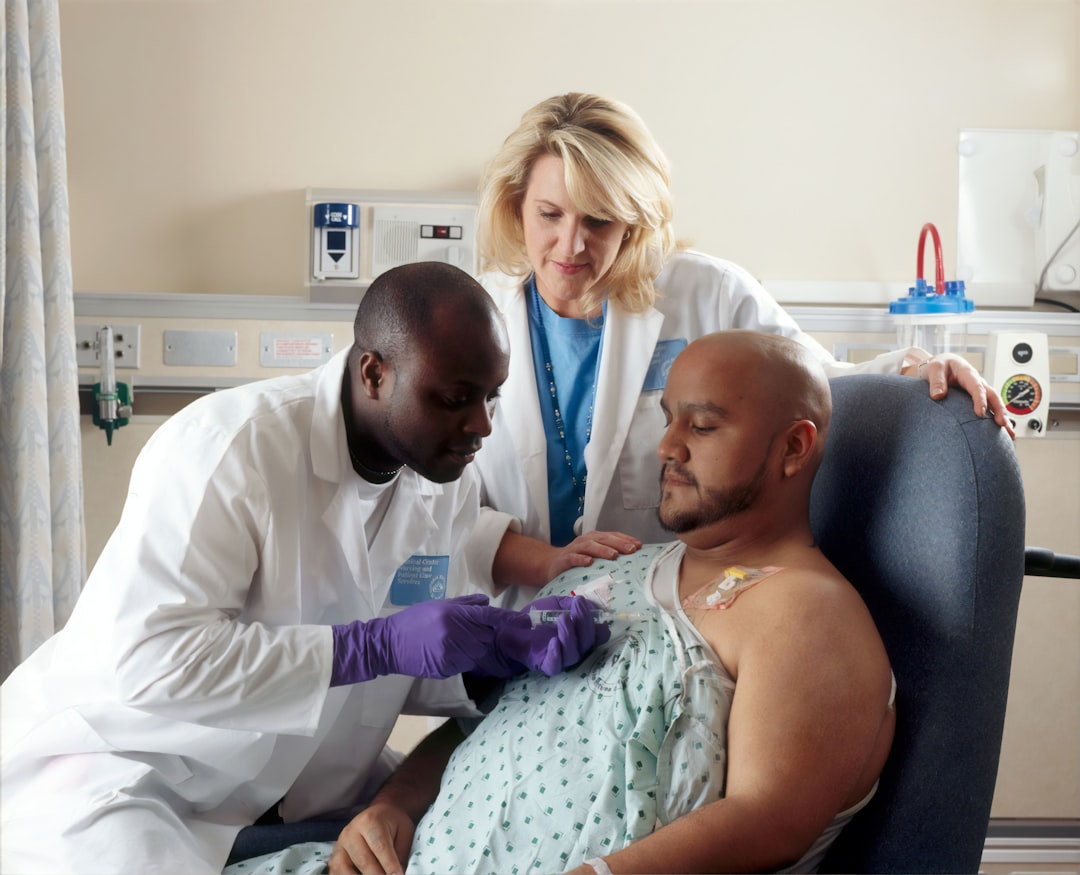
Social Security Disability Insurance (SSDI) provides monthly income for people whose medical conditions prevent them from working. Cancer and cancer treatment can satisfy that standard. Eligibility requires your condition to meet the Social Security Administration's definition of disability and, for SSDI, sufficient work history — typically at least five years of work out of the last ten for many adults.
How the Compassionate Allowances Program Accelerates Approval
Standard SSDI claims can take months. The SSA Compassionate Allowances (CAL) program compresses that timeline to weeks or days for conditions that clearly meet the disability definition. As of August 2025, the CAL list includes 300 conditions total, many of them cancers including thymic carcinoma, acute leukemia, pancreatic cancer, and glioblastoma. Since the initiative began, over 1.1 million people with severe disabilities have been approved through this accelerated process, according to the Social Security Administration.
"With the inclusion of these 13 conditions, the CAL list now includes 300 conditions in total. Since the CAL initiative began, over 1.1 million people with severe disabilities have been approved through this accelerated disability process."
You do not submit a separate CAL application. You apply for SSDI online at ssa.gov, and the SSA automatically flags qualifying conditions. This is not to say approval is guaranteed — documentation still matters. Of course medical records must confirm the diagnosis and its functional impact.
SSDI Waiting Periods and SSI as a Parallel Track
Approved SSDI claims carry a six-month waiting period before monthly payments begin. The clock starts from when your condition became severe enough to prevent work, not from your application date. After receiving SSDI for two years, you become eligible for Medicare.
Patients who lack sufficient work history may qualify for Supplemental Security Income (SSI), which bases eligibility on limited income and resources rather than work credits. Some patients qualify for both programs when SSDI payments fall below SSI thresholds — the SSI amount adjusts downward by whatever SSDI pays.
- Gather medical records confirming diagnosis, staging, and treatment plan.
- Review your Social Security statement for work credit history.
- Apply online at ssa.gov or call 1-800-772-1213.
- Request a disability determination interview if prompted.
- Track your claim status; CAL-flagged conditions move faster.
How Do Co-Pay Assistance and Patient Assistance Programs Work?
Why does insurance cover your drug but leave you unable to afford it? Because co-pays, coinsurance, and deductibles sit in a gap that insurance was never designed to fill. Patient assistance programs exist to fill that specific gap.
The CancerCare Co-Payment Assistance Foundation (CCAF) helps insured patients afford co-payments, coinsurance, and deductibles for chemotherapy and targeted treatment medications across more than 40 cancer-specific funds. Eligibility requires income up to 500% of the federal poverty level, U.S. citizenship or legal residency, and a confirmed cancer diagnosis. Grants cover a 12-month period, with retroactive reimbursement available for expenses incurred up to 60 days before approval. Apply online or call 866-55-COPAY (866-552-6729), Monday through Friday.
CCAF covers prescribed cancer treatment medications only — not scans, radiation, or lab work. For those costs, CancerCare's Financial Assistance Program may offer limited grants for transportation, home care, child care, oral medications, and durable medical equipment. Funds distribute on a first-come, first-served basis; call 800-813-HOPE (4673) for a brief interview with an oncology social worker.
Starting July 1, 2026, the merged TotalAssist program from Patient Advocate Foundation and PAN Foundation will become the nation's largest charitable patient assistance portfolio, with nearly 150 disease-specific and health equity funds. Unlike many legacy programs, TotalAssist grants carry no restrictions on expense type — patients may apply funds toward co-pays, premiums, office visit charges, and administration costs. A six-month lookback policy allows reimbursement for qualifying expenses incurred before enrollment.
Pharmaceutical company programs operate on a third track entirely. Drug manufacturers run their own patient assistance programs for uninsured or underinsured patients. CCAF co-payment specialists routinely refer patients to these programs and to searchable databases such as PhRMA's Medicine Assistance Tool when CCAF lacks funding for a specific cancer type.
What About Housing, Transportation, Rent, and Utilities?
Does the American Cancer Society offer financial assistance? Yes — but primarily through in-kind services rather than cash grants. The distinction matters because calling 1-800-227-2345 expecting a check will misroute your effort.
Hope Lodge communities provide free lodging at more than 30 locations across the U.S. and Puerto Rico for patients and caregivers traveling far from home for treatment. ACS provides free lodging to more than 29,000 cancer patients and caregivers each year, saving them more than $55 million in lodging costs annually. An Extended Stay America partnership offers reduced-rate hotel stays at over 700 locations nationwide — more than 150,000 donated room nights totaling over $9 million in savings since 2013.
For transportation, the Road To Recovery program provides free rides to cancer-related medical appointments through trained volunteer drivers. Schedule rides by calling 1-800-227-2345 well in advance — coordination requires several business days. Eligibility requires travel to a cancer-related appointment; caregivers may need to accompany minors or patients who cannot walk without assistance.
Neither program pays your rent directly. For household costs, route through LIHEAP for utility assistance, SNAP for food, and TANF for cash support in qualifying states. CancerCare's Helping Hand database lists hundreds of regional organizations that may cover rent, utilities, or other treatment-adjacent expenses. Search by diagnosis and zip code before assuming no local help exists.
How to Build Your Assistance Portfolio
Financial assistance for cancer is not a lottery ticket. It is a filing system. Insurance handles what insurance handles. Everything else requires you to match each expense category to its corresponding program, apply in parallel rather than in sequence, and track deadlines separately.
Start with disability if you cannot work — SSDI or SSI replaces income while other programs reduce costs. Apply for co-pay assistance the week your prescription is confirmed, because first-come funds close without warning. Request Hope Lodge or Road To Recovery rides before booking travel. Call 800-813-HOPE and 1-800-227-2345 in the same afternoon; they serve different functions.
Patient assistance is not charity in the sentimental sense. It is infrastructure — built because the gap between diagnosis and solvency is predictable, documented, and funded. Your job is to enter that infrastructure early, while the filing windows remain open.