
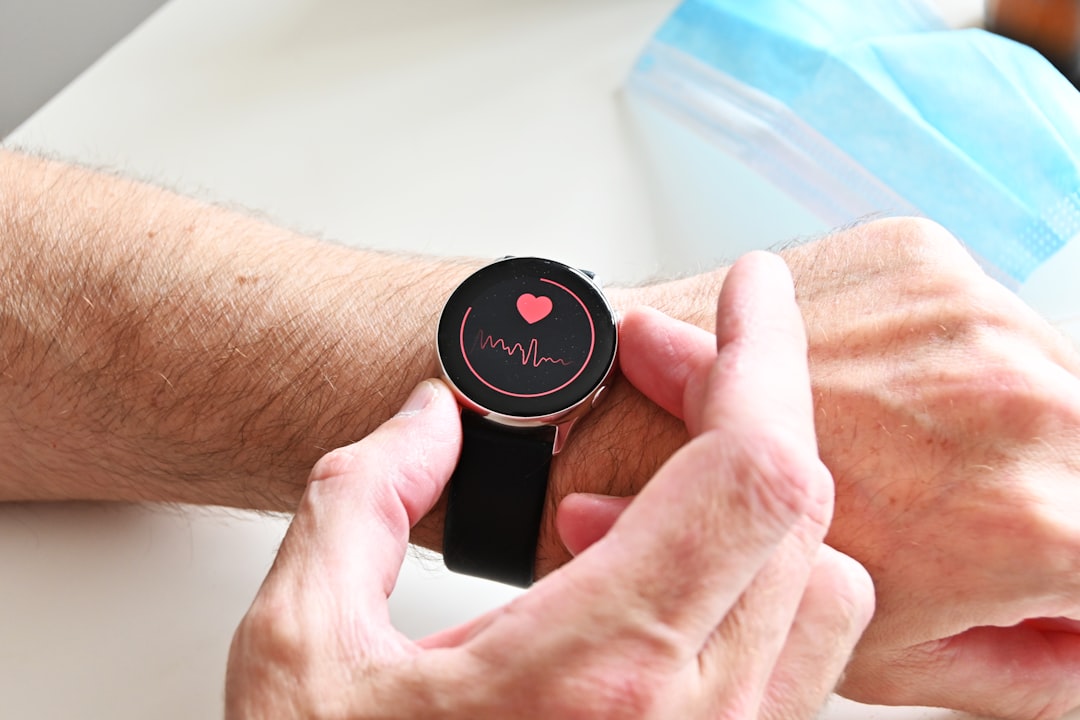
Dangerous AFib Heart Rate: When to Go to the ER
In March 2019, a 71-year-old retired teacher named Elena checked her pulse during a bout of palpitations and counted 168 beats in sixty seconds. She had lived with atrial fibrillation for three years and treated it as a nuisance, not a threat. The number on her wrist told a different story: her upper chambers were firing chaotically, and her ventricles were racing to keep up. That gap between feeling "fine" and measuring danger is where most AFib emergencies begin.
This article answers the questions Elena should have asked before she drove herself to the hospital: what heart rate is dangerous with AFib, when the emergency room is the right call, what rapid ventricular response actually means, and how medications like beta blockers fit into long-term control. The mechanism matters as much as the number.
What Heart Rate Is Dangerous With AFib?
AFib is not a single heart rate problem. It is an irregular rhythm disorder that affects an estimated 5 million Americans today, a figure the American Heart Association projects will exceed 12 million by 2030. The danger comes from two forces working together: the loss of coordinated atrial pumping and the speed at which the ventricles respond.
Clinical guidelines draw a practical boundary around resting rate. The Merck Manual Professional Edition states that patients with AFib of any duration require rate control, typically to fewer than 100 beats per minute at rest, to control symptoms and prevent tachycardia-induced cardiomyopathy. The 2023 ACC/AHA/ACCP/HRS guideline, published in Circulation, sets a slightly wider target: resting heart rate below 100 to 110 bpm for most patients without heart failure.
Concern rises in steps, not in a single universal cutoff. According to Healthline, European Society of Cardiology position statements recommend medical evaluation when heart rate exceeds 120 bpm, while ACLS guidelines flag rates above 150 bpm as candidates for urgent intervention because of hemodynamic instability. Medical News Today notes that once heart rate consistently exceeds 120 bpm, the heart may fail to deliver adequate blood flow to organs—a condition clinicians call hemodynamic instability.
Is 150 bpm dangerous? For many people at rest, yes. The Merck Manual warns that ventricular rates above 140 beats per minute may cause heart failure, especially in patients with borderline or low cardiac output. This is not to say every person at 151 bpm needs an ambulance; age, medications, and underlying heart function shift the threshold. But 150 at rest with symptoms crosses from monitoring into action.
Can AFib Push Your Heart Rate Over 200?
Yes. AFib with rapid ventricular response—abbreviated RVR—occurs when the atrioventricular node conducts too many impulses from the fibrillating atria. The Cleveland Clinic defines AFib with RVR as a heart rate of 100 bpm or more with an irregular ventricular rhythm. In acute episodes, rates can climb well beyond 150 and occasionally exceed 200, particularly before treatment or when medications wear off.
RVR is dangerous because speed compounds irregularity. A 2022 review in PubMed Central on acute rate control states plainly that a high rate is an independent strong predictor for mortality, adding to the damage caused by irregular rhythm and the loss of atrial contribution to cardiac output. Without treatment, the Cleveland Clinic notes that AFib with RVR can lead to cardiomyopathy, stroke, low blood pressure, and congestive heart failure. Nearly 4 million emergency department visits in the United States from 2007 to 2014 were for atrial fibrillation—a scale that reflects how often this rhythm escapes outpatient control.

Rate is the lever; rhythm is the background. The ACC/AHA 2023 guideline emphasizes early rhythm control as a pillar of management throughout the disease continuum. Rate control alone does not erase the underlying arrhythmia. It buys time for the ventricles while clinicians address triggers, anticoagulation, and longer-term strategy.
When Should You Go to the ER for AFib?
How do you know the difference between a bad afternoon and a medical emergency? Three parallel questions clarify the decision: Is the rate sustained above 120 at rest? Do symptoms exceed mild fatigue? Has anything changed since your last stable episode?
Go to the emergency room—or call emergency services—when any of the following appear, regardless of whether your pulse feels fast:
- Severe chest pain or pressure
- Shortness of breath that worsens or does not improve with rest
- Dizziness, fainting, or confusion
- Sudden weakness on one side of the body or difficulty speaking
- A heart rate consistently above 150 bpm at rest
- A rapid rate that does not slow with prescribed medication or rest
Healthline lists these same symptoms as ER-worthy because they may signal stroke, heart attack, or acute heart failure—not merely a fast rhythm. The Cleveland Clinic adds that a rapid heart rate that refuses to slow down warrants emergency evaluation, especially in patients with a history of RVR.
Of course, not every AFib episode requires an ambulance. A resting rate between 60 and 100 bpm with mild, familiar symptoms may be manageable with a call to your cardiologist. This is not to say you should wait days. Persistent rates above 120 bpm deserve urgent outpatient evaluation even when you feel stable, because hemodynamic compromise can develop before symptoms peak.
Can AFib Cause a Slow Heart Rate?
AFib is known for speed, but it can also produce bradycardia—a resting rate below 60 bpm. The American Heart Association defines bradycardia as a heart rate under 60 beats per minute. In AFib, slow rates typically arise from two mechanisms: damage to the AV node that filters impulses, or rate-control medications that overshoot their target.
Severe bradycardia can lead to heart failure, frequent fainting, and in extreme cases cardiac arrest. Treatment may require adjusting beta blockers or calcium channel blockers, or implanting a pacemaker when the conduction system cannot maintain adequate rate on its own. A fast rhythm problem and a slow rhythm problem share one outcome: the heart fails to meet the body's demand for blood flow.
How Beta Blockers Control AFib Heart Rate
Beta blockers do not cure AFib. They slow AV nodal conduction so fewer atrial impulses reach the ventricles. The Merck Manual lists beta blockers—metoprolol and esmolol among them—as first-line rate control medications, alongside nondihydropyridine calcium channel blockers such as verapamil and diltiazem.
The mechanism explains the clinical choice. Beta-1 receptor blockade reduces sympathetic drive on the AV node. For acutely ill patients, short-acting agents like esmolol allow titration in the emergency setting; the PubMed Central review notes that ultra-selective agents such as landiolol may produce less hemodynamic interference in critically ill patients. The 2023 ACC/AHA guideline recommends beta blockers or calcium channel blockers for hemodynamically stable patients with rapid ventricular response, with digoxin as an adjunct when first-line agents fail or are contraindicated.
Take the medication as prescribed because skipping doses removes the brake while the atria continue fibrillating. Report persistent rates above your personal target—often 100 to 110 bpm at rest—to your clinician rather than adjusting doses alone.
Does Controlled Heart Rate Eliminate Stroke Risk?
No. Rate control and stroke prevention operate on separate pathways. The American Heart Association states that AFib carries an estimated fivefold increased risk for stroke, and that 12% to 20% of people who have strokes caused by blood clots have this heart rhythm disorder. The Merck Manual puts the annual risk of cerebrovascular embolic events at 3% to 5%, with AFib responsible for approximately 20% to 25% of all strokes.
A resting rate of 85 bpm does not dissolve the clot risk that comes from blood pooling in a fibrillating atrium. The 2023 ACC/AHA guideline expanded stroke risk assessment beyond a single score and emphasized anticoagulation decisions based on validated annual thromboembolic risk, alongside lifestyle modification—blood pressure control, weight management, alcohol moderation, and sleep apnea treatment—as pillars of comprehensive AF management.
Rate control protects the ventricle from exhaustion. Anticoagulation, when indicated, protects the brain from embolism. One without the other leaves half the mechanism unaddressed.
What Long-Term Rate Control Looks Like
Sustainable AF management combines daily medication, trigger reduction, and periodic rhythm assessment. Target resting rate generally falls below 100 to 110 bpm, tightened to below 80 bpm in patients with heart failure symptoms or tachycardia-mediated cardiomyopathy, per the ACC/AHA framework. The Cleveland Clinic notes that catheter ablation achieves 80% to 90% long-term freedom from AFib symptoms in appropriately selected patients—a rhythm strategy, not a rate strategy, but one that reduces the need for chronic rate suppression in some cases.
Track your resting pulse during stable weeks so you recognize your baseline. Carry your medication list. Know your cardiologist's after-hours line. These are not dramatic measures; they are the operational layer that prevents a 168 bpm afternoon from becoming a preventable crisis.
Conclusion
Elena's 168 bpm reading was not a mystery. It was RVR—speed stacked on top of chaos—and it required emergency rate control. A dangerous AFib heart rate is not one universal number; it is the point where rate, symptoms, and cardiac reserve collide. Rest above 120 to 150 bpm, especially with chest pain, breathlessness, or neurologic changes, means the ER. Beta blockers slow the ventricles but do not remove stroke risk. Measure your pulse, treat the rhythm and the rate as linked but distinct problems, and act on sustained elevation before hemodynamic instability closes your window for outpatient control.